Showing posts with label exclusive. Show all posts

Thursday, October 2, 2008

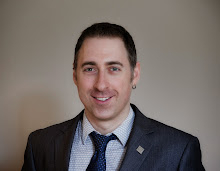
Jeff Geddis - The Interview

I had a really extensive conversation with Jeff Geddis for the article in this month's Outlooks, but with only so much room, there was so much left unsaid.  Here is the interview, where Jeff talks about being a working actor in Canada, the Canadian film and television industry, and more about his role on Sophie.  One of the things I consciously avoided in this interview was the kind of thing you might find in OUT or The Advocate, where the interviewer immediately has to establish the actor's sexuality, and frame the interview around that.  If I was going to write about a gay character who was representing the maturation of the way gay men are portrayed on television, I might as well also show the maturation of writing about said portrayals.  On the whole, Jeff was a fantastic interview, and great to talk to about all of that range of subject matter.

Q: Give us a little bit about your background.
A: I’ve been an actor based out of Toronto for coming up on ten years now, a graduate of York University’s acting programme. Graduated in 1998, which feels like a million years ago now. I’ve been a “working professional” for coming up on ten years now, done everything from popular TV commercials to bit-parts in feature films, to lead roles in MOWs, to guest spots in other TV shows, and then of course most recently the part of Matt on Sophie, and I also play a regular role on a show called The Latest Buzz for the Family Channel, and I’m currently working on an animated series called Stoked which will be on Teletoon. So I’m kind of multitasking these days. Whenever I have two or three days off with Sophie, I’m sort of whisked back to Toronto to do a day or two on my other two shows. It’s been good—I’ve been very fortunate in that respect, it’s not often that you can manage a schedule like this, but I’m losing years off my life and my grey hair is getting greyer, but I’m managing—barely.

Q: Why Matt? What drew you to that character?
A: At the risk of sounding boring, it’s simple that in the professional life of an actor in Canada, opportunities present and sometimes you respond well to the material and other times not, and generally when you do respond well to the material and deliver what they’re looking for then you’ll be lucky enough to be hired. With Matt, it was just something that I found—I found Matt to be a very charming character, and I tend to gravitate towards those characteristics in any of the roles I play. It’s a little bit quirky which is kind of fun—those are some of the things that I responded to. And I think generally speaking I just kind of ‘got’ the tone of what they were looking for, for the show, and so the rest is kind of history. Here I am, I think a year-and-a-half later—I think we did the pilot in 2006. It’s just been a matter of trying to finesse the performance and pay attention to what the writers are looking for, and again the tone of the show, and keep delivering what they’re looking for.

Q: What about your approach to playing the character? Is there anything in particular that you wanted to bring to it that necessarily might not have been in the material?
A: The biggest thing for me is that I wanted to make Matt very real and relatable. I think we see all kinds of presentations of gay men on television and in film, and there are some stereotypes that we see, but for the most part I wanted to keep Matt to just be as relatable as possible to just about anyone watching the show, be it gay, straight of otherwise. I wanted to just get it right down the middle and I think I’ve managed to do that pretty well, and I think the response has been pretty favourable. I think Matt is generally a pretty positive person who is a positive role model in Sophie’s life, and this is something that we’ve been trying to maintain.

Q: That was one of my observations watching the show is that it escaped most of the obvious stereotypes, and that was something I really enjoyed about it. A lot of sitcoms get lazy in their writing of gay characters and you become the sexless best friend or just someone for a wisecrack here or there, and Matt seemed to escape that while still being a funny and, like you said, relatable character.
A: I think we definitely touch on some of those characteristics that you mentioned, but I think it’s much more thorough than that, and we give a real living, breathing person with a real pulse who’s got all the same challenges and desires and interests and flaws and positive characteristics that everyone has. I think the sexuality factor in a lot of ways almost plays secondary to who Matt is, and I think that’s a really important thing in our culture now is to try to take the focus off sexuality so much anymore. I think it’s really important to just [see] ‘who is the person that we’re dealing with here,’ and I think that’s been something we’ve been pretty good at focusing on. Again, it doesn’t just fall on me, it falls on everyone—the writers, the overall style and approach to the show and the character in general.

Q: One of the other things I noticed was that they did a very straight-down-the-middle treatment of Matt’s relationship with the neighbour, Verner. It wasn’t just hinted about or seen off-screen, it was actually there and matter-of-fact and not played coy with.
A: Yeah, I personally think that’s a really good thing. I responded really well to that when we first saw the scripts for it. It’s a relationship, and this is a character who’s going to have relationship ups and downs like any other person, and it’s just something that ‘it is what it is,’ and we made it real, and we had a lot of fun with that storyline, and I think it’s something that people responded really well to.

Q: I also liked the way that, in the episode after Verner was introduced when Matt went and had his ‘affair’ on the side, it made it much more relatable to a gay viewer because it wasn’t so moralistic in the treatment of ‘oh, you’re just playing him as the stereotypical promiscuous character’—there was depth and nuance to it.
A: I’m glad—just hearing you say that, you don’t get that many direct reviews, so I’m really happy to hear that’s how it came across because that was really important to us. I think to your point about the stereotype of promiscuity in the gay culture, it’s in all cultures—people have question marks, they have second thoughts, they have second guesses, we have something called ‘cold feet’ in the world.

Q: That’s part of how the whole concept of Sophie came about.
A: Exactly! And as you’ve noticed in the show in general, the whole premise of the show is built on that. Even good, strong, heroic characters are going to have dilemmas, they’re going to have moral dilemmas, they’re going to make choices sometimes that even the viewing audience in its entirety won’t necessarily agree with, but that’s the whole point. You’re supposed to challenge people, you’re supposed to present ideas that a lot of people, whether directly or indirectly can relate to. I think that’s really important. Going back, this is a show that’s based on a French show, and again the relationship is really strong in that version as well, and it’s just something that plays really well on the screen, and I’ve watch the French show myself and I responded really well to the way that the character was portrayed and the way that relationship with Sophie was built, and I think that it was just a really positive example of modern TV writing.

Q: Being as the show was based on a French predecessor, how much has that influenced your portrayal of the character?
A: You should watch it—it’s really, really fantastic. I only understand about thirty percent of it, but on a personal basis it’s a really, really well-built show. It’s a one-hour, so the difference between that show and this show, is that it’s a one hour format so it has time to kind of pace out and explore side storylines and some of the surrounding characters a little more, whereas our show is a half-hour and it’s a bit more of a punchy-style of comedy, so it’s more just based on the original Sophie, so it plays more to that format of a half-hour comedy. The characters are a little more broad, we’re playing to the comedy a little bit more, and we all centre more around Sophie in this version of the show. In terms of what influences came from the original show, almost none at all. I didn’t even see the original show until we were pretty much completed filming the first season of our show. It was more just for curiosity’s sake, and it’s good in a way. I don’t think any of us wanted to set out to mimic something that was already there. We just wanted to make it our own. As far as building the character of Matt in the first place, obviously I’ve got a few images in mind of good friends I’ve spent time with over the years, and small characteristics that you’re charmed by. It’s like any role—you bring to it what you know and what you understand, and your experiences, and hope that it can all blend into one little presentation.

Q: You’ve said the response has been fairly positive so far. Can you talk a little more about some of it that you’ve had?
A: Just in general, the feedback that we’ve had from focus groups and from the audiences is that they’ve responded very, very well to the relationship between Matt and Sophie, and it’s a true friendship and it’s a truly thorough, supportive relationship. That’s been the response, and that’s what we set out to create and in that sense we’ve succeeded, and they just really believe the two of us as friends. I think it’s the kind of friendship too, that—these are people in their early-to-mid thirties, and there are so many challenges that come with that—anything to do with work, relationships, we have a single mother, all this kind of stuff, and people, they bought it. They really believe that we are two people who are weathering the storm of life together. That was in general, that’s sort of the main response, so that to me felt like success.

Q: Anytime I read an interview with an American actor who plays a gay role, they talk about the flood of fan mail from all these kids in Middle America who thank them for helping them come out to their parents, and I’m wondering if you’ve had that parallel experience?
A: I haven’t! I have not had that parallel experience at all, and I don’t know if it has anything to do with our culture being a few steps ahead in that respect to begin with—I’m not sure. I would be happy to receive any kind of feedback like that, but as it stands, I haven’t, and again if a positive portrayal of a gay character can help someone’s who’s struggling with their coming of age or coming out to their parents, I think that’s terrific. Maybe it has something to do with the fact that our core audience is maybe a little older, I don’t think we’re necessarily targeting a younger audience, I’m not sure if that’s a factor.

Q: Do you think that might change once it airs in the States on ABC Family?
A: Yeah, it’s very possible. It’ll be really interesting to see how we roll forward once that happens. I mean, we play to a pretty small audience—Canada only has thirty million people—so as soon as it hits the States, you’re going to be hitting a larger audience, so it’ll be interesting to see how it’s received.

Q: The new season—how’s that going so far?
A: It’s going really well. It’s like any TV show, I think you do a little bit of finding your feet in your first thirteen episodes, and we’ve been picked up for eighteen this time around so the morale is really high right off the bat. The scripts have been really strong, and everyone had the benefit of the first season to get to know each other and get comfortable, so now it kind of feels like it’s in you—you’re no longer trying to find it. You feel strong in the character, and you feel like the show is being written for what you’ve brought as opposed to you trying to find what’s already on paper. That’s a fun feeling, to know that every script I get now is being written for me, whereas the first half-dozen episodes of season one, it’s just me trying to meet them half-way and now it’s more symbiotic.

Q: I know you’ve done a lot of writing projects on your own—any interest in doing your own scripts for Sophie, or are you content just to be the actor on this one?
A: I think in this case, it’s television and I don’t know if television is really my forte. I’ve done quite a bit of writing over the years, but it’s mostly feature-film format, so I don’t know that I would ever feel as confident writing for the half-hour TV world, but it would be fun and any chance I get, I’m always throwing ideas or suggestions—I’m the guy who’s always raising his hand at meetings, asking questions, making suggestions, making sure that everything is consistent, and making sure that everything works for what we’ve built so far.

Q: I take it the response has been pretty good to that kind of input?
A: Yeah, we have a great writing team on that show, and it’s a real team environment. It’s nice, and I think anytime you do get on a show that seems to be working the one characteristic in common is that everyone is really joining hands and playing it like a team as opposed to anyone ruling over anyone else.

Q: You’ve been a working professional for ten years, and you haven’t gone off to the States, and I’m wondering a) why didn’t you go away—and it’s not a bad thing, but it’s something I’m always curious about, and b) your take on where the industry in this country is at right now.
A: As for the a part, why didn’t I go, I actually did spend a bit of time in the US about five years ago just to kind of explore and see what it was about, and I had worked on a few MOWs and projects that were popular in the US, and so I got some representation and spent some time down there, and strangely, on a personal level I didn’t really find—you’ve got be careful not to say anything bad about the United States—but the one thing I learned about myself is that I spent some time in LA, and I spent some time after that in Vancouver, and there was a stretch of time where it became apparent to me that the place I live, that the home I make for myself, is much more important than I ever thought it was. I just had this thought in my head that I would just pack up and go off to the States and never come back, and it didn’t really feel like the right fit for me, it didn’t feel like home for me, and I didn’t want to stay there and put in the time and do the grind—I mean, there’s always a bit of a grind involved, and I thought if I’m going to be doing that, then something felt more right about Toronto for me. That doesn’t mean I won’t ever go to the States, but as far as where I want to base myself is that I do want to stay based in Canada, and I think I had a renewed appreciation for Canada being away for a stretch of time, and I knew that I wanted to take that renewed energy and enthusiasm about the country that I live in and I really wanted to find myself working more in Canadian projects, and lo and behold not long after that I was doing almost entirely Canadian work, so it was kind of interesting how that played out. Since that time—I just love this country, just seeing politically what goes on around the world, I just really love where we are and I think that we have very smart, interesting writers and we have really strong, talented actors in this country, and I think that it’s unfortunate that we have such a small population because we have a lot to deliver, and I just want to be a part of that. The last couple of years, I’ve really just been putting my energy toward that, just really trying to contribute to making really good Canadian TV and film. To your second point about where the industry is heading, I think we’re in a really good place. We’ve got shows like Flashpoint that debuted simultaneously here in Canada and the US to great numbers, and the CBC had a couple of shows—our shows and The Border last year which again people responded really well to, and I think that it’s exciting and we need to keep doing it, we need to keep forcing and making it happen, and at the end of the day, audiences will watch what’s good, and if it’s good, people will talk about it, marketing will happen, people will pay attention, and before you know it, you’ll have a long-standing audience.

Q: One thing I always hear about is the lack of a star system in English Canada. Being as you’re shooting in Montréal with Sophie, I’m wondering if you have any different experience with that versus shooting in Toronto.
A: One thing I have noticed is that Québec in general has an enviable situation. I’ve never worked in Québec before this job, and I find I’m envious. They have a strong culture here, and it’s quite—insular in a way. It’s not necessarily that they’re watching things from France. Their audience watches their shows here, they make great TV, and they have great viewership, and they have a small star system and they really do have their own thing happening here in Montréal. Being from English Canada and knowing that just south of the border that people walk and talk and think and act quite similarly to the way that we do, so of course you have the option to watch a CBC programme or you could flip over to another channel and watch an NBC programme. So here, it’s just amazing—I didn’t realise it until I saw it first-hand that the practitioners here are really amazing, and the local culture really responds, and the they do have stars here and they have a completely amazing, singular TV and film world here that I didn’t realise existed. I wish we had a similar thing in English Canada, and again we have the US situation right there, and it’s about options. I guess if we could find a way to get patriotism into the eyes of the TV viewing audience it would be helpful. We’re really quick to criticise the US on their politics and their world relations but they don’t think about it when they flip over to watch CSI instead of The Border.

Q: I’m just wondering about some of your other writing projects.
A: I wrote a book sort of like my list of things I want to do in life, and it has yet to be published so it’s not something I go on at length about. I’ve written a bunch of screenplays with a writing partner I’ve been working with for a few years now, and we’ve had a few things in development, a couple of near-misses and a couple of “almosts,” but we actually have a film that should be getting made in early 2009 if all goes according to plan, which is like a feature-comedy, so that’s exciting. It just adds another variable, trying to manage three jobs plus writing scripts, it’s pretty interesting life, I don’t have a lot of time for anything else. But it’s a passion, and it’s something I’ve been working with for quite a while now. It’s funny—I used to think that acting was a difficult professional path, but writing is probably more so. I think you have to really love it to keep with it, and like anything over time, it will start to pay off. 

On how writing and acting intersect
Being a writer myself, I write a character and I get an idea in my head and somebody walks into the room and they’re a brilliant actor and they weren’t what I was thinking, it’s nothing against them, it’s just that you’re not right for the guy that I wrote. The thing is that’s really important for younger actors or people who are really struggling to understand that.

Wednesday, October 1, 2008

Live(ish)blogging the Ottawa-Centre EGALE/Capital Xtra Debate

I decided to take up Paul Wells on his challenge to see other political bloggers liveblog (or at least recap) their own local candidates debates.  Last night I attended the Ottawa-Centre debate put on by EGALE Canada and Capital Xtra, focused on the GLBT community's issues.  While I couldn't post this live (it was a bunker down in the basement auditorium of the Ottawa Public Library Main Branch--and I had plans afterward), here is the proceedings as I recorded them on my Motorola Q9 smartphone (edited for spelling and to clarify a couple of points).

17.58 
The candidates are setting up on the stage, as are the panel of questioners. At least, that's what I assume they are. For the NDP we have the incumbent Paul Dewar, with the Liberal challenger Penny Collenette, and the Green candidate whose name I don't know. Already she's talked about how green is her colour (she's wearing a huge green shawl), and was complaining that they had bottled water on the stage, ensuring she got tap water in her own mug. 

18.02
Two-minute warning from the moderator, Marcus McCann, the associate publisher and managing editor of Capital Xtra. 

18.04
Jen Hunter - that's the Green candidate. And we're starting. McCann lets us know that despite the absent Conservative candidate, he says we have the three candidates most likely to win. He introduces the panel as local activists, and says that the issues they want to address aren't in the party platforms. He lays out the rules, and says the randomly chosen order goes Penny, Paul, and Jen.

18.08
The panel is Nicholas Little from ACO, Jay Koornstra from Bruce House, Capital Xtra columnist Ariel Troster, and Michael W (sorry, I didn’t get his last name) from Carleton University’s GLBTQ Centre.

18.09
Collenette introduces herself, and talks about her dancing in the streets at Pride, and expresses her dismay at the Conservative absence. She talks about the Liberals commitment to equality, starting with the Charter before her time runs out.

18.12
Dewar spells out the gay, lesbian, trans communities, but omits the bisexual community--oops. He talks about health care mostly.

18.14
Hunter talks about how sad it is that in 2008, we're still talking about some basic human rights and social justice issues. She too lives in the riding, and wants to talk about the six core values of the party.

18.16
Koornstra gets the first question, and prefixes his question with stats about gay and bisexual men and HIV infection, and funding figures. He asks about committing funding, up to the 2003 agreed upon level, and whether it would be new money and not shuffled funds.

18.18
Dewar says yes to all three parts and tries to explain the process but says little.

18.19
Hunter looks forward to future standing committees and new funds with an eye to prevention. Talks about her time at Casey House in TO as a student, and wants more coherent funding.

18.21
Collenette says that they don't have a dollar figure in the party platform, but commits to increased funding and increased research dollars.

18.22
Michael W asks about blood donation policy including possible new wording, and asks about how they would engage their caucus about it.

18.23
Hunter was shocked as a human being about such discriminatory language, and as a person (as opposed to a robot?) she wants to fight it. Collenette warns that these questions were put into place by stealth so we need to be vigilant, and certainly she'll fight it. Dewar talks about there being no rational reason for it, but um, he's not actually informed there. It's not just the minister's call like he suggests.

18.26
Nick Little asks about safe injection sites. Will Ottawa get one?

18.27
Collenette says the Liberals support Insite and she says for Ottawa, as soon as we can but we need to get a rehab centre first. Dewar says as soon as we get the Conservatives out, and talks ideology and ignorance. Hunter says “ditto,” and fills the rest of her time.

18.30
Ariel Troster talks access to abortion, even if it is decriminalised, and Epp's bill. Asks how they would vote on such a bill, and how to improve access.

18.32
Dewar says of course he supports a woman's right to choose, and we need to focus on access, and better sex education. Hunter is again "shocked" that this is still being debated, and would vote for choice. Collenette points out this is another example of laws by stealth, and she believes in a woman's right to choose, with an anecdote about a sanctity of life question on a doorstop. Also reminder of the Canada Health Act as equal access.

18.40
Koornstra asks about drug policy and medical marijuana as it affects many with HIV.

18.41
Hunter talks about how the Greens want to legalise pot, how beneficial it would be, and how her mother has used it medicinally and it needs to be better quality. Collenette says the Liberals support decriminalising in small amounts, and she's learning more of the issue after a brief by doctors. Dewar talks about the pressured process and the need for a comprehensive review. And decriminalisation.

18.40
Michael W asks tuition accessibility, putting a queer twist on it.

18.41
Collenette touts the Liberal plan on education. Dewar points to his party platform on student loans and grants, and the learning experience of the 2005 budget. Hunter says they've been explicit about funding goals and green ventures at a macro-level. Huh?

18.44
Nick Little, as a member of POWER (Prostitutes of Ottawa/Gatineau Work Educate and Resist), asks about sex work and how many more sex workers must be murdered before they repeal those laws?

18.45
Dewar talks up Libby Davies' work, but points to the fact that most victims are aboriginal women, and says he supports POWER. Hunter says that her party hasn't much to say on this, and echoes Paul's points on vulnerable citizens. Collenette doesn't know if they would decriminalise but says we need to stop violence against women and wants to add gender to laws.

18.48
Ariel asks about equalising age of consent (for sodomy it’s still 18), and it's curious that Harper talks about throwing 14 year-olds in jail but they apparently aren’t responsible enough to have sex.

18.51
Hunter is again shocked by this, and looks south of the border for what happens when you put kids in jail. Collenette has no specific answer on anal sex but wants to talk about the principle of fairness and cited case law. And no kids in jail. Dewar gives a shout out to Omar Khadr, but gives his excuses on voting for the age of consent despite the protest from the GLBT community.

18.54
One last question from Koornstra about homelessness, since it affects people with HIV. Asks about the national strategy.

18.56
Collenette says the party wants to build 30,000 housing units and refurbishing the same number, plus making the green. Dewar goes rant-like about the housing crisis. Hunter talks about the ability of the Greens to look holistically at the issues, and that they want it to be part of eliminating poverty.

18.58
Questions from the floor, and first up is Jessica Freeman, local (and very vocal) transsexual activist. Accuses them of ignoring trans issues, and will they commit to advocating for trans issues?

19.03
Dewar talks about Siksay's bill, but not much more. Hunter says nice to meet you. Collenette says her cut-off intro would have talked trans issues. Also says Jessica educated her and she went to school to be a human rights lawyer, so she's going to fight.

19.06
Other trans activist (and Freeman nemesis) Joanne Law asks why she's being discriminated against because she has to pay $10,000 to change her M to an F on her documentation.

19.08
Hunter says she's learning to empathise. Collenette says they're looking at more than just M and F but maybe T as well. 

EGALE question on gender identity and expression.

19.09
Collenette says if they're looking to add gender, they must also look at identity an expression. Dewar talks about how institutions (RCMP, Canadian Forces) fund transitions but not the general public. Hunter is a member of equal voice, so she's in favour of all equality.

19.12
McCann says this is the most civil debate he's seen.

Question from the floor about how income splitting is discrimination.

19.13
Dewar against income splitting, Hunter is for it. Collenette is against it. Puts a shout out for the Green Shift as a cut to income taxes.

19.16
Troster asks about the court challenges programme.

19.17
Hunter says she doesn't know much about it. Collenette says they'll not only bring it back but double the funding. Dewar also says they'll bring it back.

19.18
An Options counsellor talks about how it’s not just access to abortion but also information. Can we make sure the anti-choice groups don't get government funds?

19.20
Collenette asks more about it, and talks about how we need to return to activism. Dewar talks about grassroots organisations. Hunter talks about how the fear they spread is toxic.

19.23
EGALE question on assisted human reproduction, and how the law was left vague and how the panel looking at the issue is stacked.

19.24
Dewar says they did good work but had timelines, which led to delegation, but we need equal access. Hunter misunderstands and says health spending is a provincial jurisdiction, and talks about the erosion to rights of access. Collenette says they may need a national commission for proper debate but it's not in the platform.

19.28
Nick Little talks about how criminalisation of spreading HIV prevents testing and prevention.

19.29
Hunter says maybe the “stick” approach isn't working. Collenette asks a bit more but can't offer much. Dewar says it's not talked around the caucus table, and rambles about coverage of the issue and claims ignorance of the implications.

19.32
Collenette asks the panel more about the issue, and Koornstra responds that vagaries in the law leads to judges to create their own law around it.

19.33
Question about the SPP, and how it's too vague and scary, with big numbers being offered.

19.35
Collenette explains a bit about it but seems to subscribe a bit to the conspiracy theory of it, but seems unaware that Paul Martin started it—until the questioner called her on it. Dewar talks about how it's also about regulation, which is critical now, but talks about how the security cost us, and it's less democratic than the free trade agreement. Hunter says they'll scrap it.

19.37
A follow-up from Freeman about establishing a Parliamentary hearing on the status of trans people in Canada.

19.39
Dewar talks about how Siksay's private member's bill is one avenue, and how you can address the committee. Hunter reads out from the Green platform on these issues of discrimination against GLBT people. Collenette raises the possibility of a sexual identity national commission, and also suggests joining a party and working that way.

19.43
A question on human rights and trade. Collenette up first about the necessity for a dialog with those countries. Dewar talks corporate social responsibility. Hunter says she's humbled that we can't hold our country up as a paragon, but her party is more about fair trade, and we have work to do at home as well.

19.45
McCann thanks everyone and we're done after a bit of applause.

Overall impressions: This largely dealt with policy areas not covered in party platforms, which was the whole idea.  Hunter was “shocked” by pretty much everything.  It could have been a drinking game every time she said it.  Collenette offered the most succinct answers, not always needing her allotted time, and wasn’t afraid to say when she didn’t know of issues.  She was also the only one to ask the panel more about their questions either during her time or after all had their turns.  Dewar, on the other hand, who has been around these sorts of events the longest, tended to talk around issues rather than offering actual answers, but with his usual bombastic rhetoric.  The fact that there was no Conservative representation was likely strategic because they knew they had no chance with this particular voter demographic, and thus there was very little to separate these three candidates on purely GLBT issues.

Also?  Liveblogging is difficult work, and my thumbs are a bit sore.  Kady O’Malley, you have my utmost respect!

Tuesday, September 2, 2008

Nancy Ruth's Panel Extras - September

To round off our bonus questions, here are those from Conservative Senator Nancy Ruth, as well as excerpts from our extended conversation.

Q: What was your highlight for the last session?
A: The Auditor General has committed to doing an  audit of gender-based analysis of some federal departments in May, so for me that was the highlight of the last session.

Q: How are things with the Defence and Security Committee? You’d been doing work with the Human Rights committee, so how is it moving to this one?
A: I did ask what kind of internal change has happened since the Michelle Douglas case [from 1992] in terms of homophobia and monitoring and measuring that, and I’ve never had an answer. I did ask General Natynczyk, just days before he became king, why since they recruited at the Dome Stadium with helicopters and tanks and stuff, why we didn’t recruit at the Pride Parade in Toronto, and he didn’t know the answer to that and lo and behold they all turned out, and some people say they were just gorgeous and cute as hell. But there was no talk within the queer community in terms of what is the implication of having a military and Canada being at war—it was just the superficial ‘oh, isn’t he good looking?’ But I have seen the military’s report on their recruitment that day—they ran out of pamphlets by four o’clock in the afternoon and they were open until eleven. There was a huge number of people, and they ended up with thousand and thousands of names, and they had about two hundred and fifty recruitment possibilities.

Q: What was the low point of the last session for you?
A: The low point to all sessions for me is when we get into playing party politics and stupid little bickering and delays just because we’re playing games—it drives me crazy. It drives every woman crazy—it’s not the way women do business. You’ve got a job to do, you do it and then you go home. They don’t threaten to keep you there another week or whatever. I hate that stuff—that kind of political process just drives me up the wall, and every June and every December it’s the same. Once you get close to wanting to leave for your break, all the games start about a month before.

[Further to the Panel question]:
I have always wondered how it would impact Afghanis when they see that we legitimise [queer] soldiers—I don’t know the answer to it, but it’s something I’ve questioned. It would be interesting to ask, but I don’t know how you’d ever get an answer, if you asked the local Kandahar tribal ruler, what kind of answer would you get?

I also understand that there’s a woman officer in Afghanistan who is responsible for implementing United Nations Security Council Resolution 1325 which deals with women’s peace and security, so it’s her job to push that agenda in the external relations, outside the wire, so it’s probably good. So to guess what kind of impact it is to have GLBT troops would only be totally speculative. I’ve heard stories of other NATO troops coming to our and Australian chaplains where they’re afraid to go to their own.

I was on a naval frigate at the end of June, and one of the corridors I went down I saw a rainbow bow stuck on a file cabinet, so I inquired later and asked if there are many homosexuals on board? And this was in the one-up from the Ordinary Seaman’s level of dining rooms, and the answer in this great conviviality was “Oh, no, we gave him that because he’s so anti-queer, and that’s a joke.” But there was no further discussion of the issue. I can tell you, of the four days I spent on that naval frigate, I did not come out. I did not raise the issue—I was in enough trouble with whatever feelings I had after one of the big anti-aircraft guns went off, and someone said ‘What was that like for you, Senator?’ and I said ‘Well, I’m on a boat with 250 other people who have committed to going off to war and killing people—that’s new for me.’ And then I was not seen as sympathetic to the military. I’m not anti-, but it’s difficult for me. I wish nation states didn’t have these, didn’t have to solve problems through this business. So I was not going to ask queer questions except for the one time that I asked it at that level, and I don’t think I would have believed anything. Senior officers would have said anything because it was a big propaganda thing for them—they had Bob Rae and Alexa McDonough travelling back on the same boat to Halifax that I and [another senator] came up on.

On recruitment:
What I know of the recruitment in the military is that they recruit something like 6500 a year, and Canada’s having a hard time training these folks because all the people who train them, the staff sergeants are all off in Afghanistan. So that’s an issue—how do we stay at war and expand our military? But I also know that the number of people who are leaving the forces, through attrition of either they’ve come to their time, or they’re leaving for family life, is 5500, and it’s only a net gain of a thousand. That’s pretty horrific. Queers without children might be a very good group to recruit from, because the attrition, a lot of it is related to family from what I hear. Except for those who’ve done their twenty years’ service, or whatever.

Siksay's Panel Extras - September

Further to this month's edition of Outlooks' Queer Parliamentary Panel, here are NDP MP Bill Siksay's bonus questions.  Mr. Siksay was the one panel member in town when I was working on the piece, which allowed us a sit-down interview.  He was far less optimistic about how things were going in Ottawa at the time.

Q: What were your highlights from the last session?
A: There’s a couple of things around GLBTT issues, certainly with Tom Lukiwski’s comments was a serious incident in the last Parliament, even if it was something that happened seventeen years ago, I don’t think the government really handled it very well. He appropriately apologised and quickly but there needed to be some follow-up to show that those opinions weren’t the basic beliefs of Lukiwski or the Conservative caucus, and to see some GLBT-positive action on their part, and we’ve never seen that. So that was a dramatic moment and that’s still outstanding. I was disappointed that we haven’t had a chance yet to debate the bill to include gender identity and expression in the Human Rights Act, but I did table another private members bill to add provisions for protecting trans folks in the criminal code so it can be into consideration as a hate crime at the time of sentencing, and hopefully we’ll have a chance to debate those. And if we get to a new Parliament, I’ll make it into one bill and deal with it all at once. The whole question around Bill C-10 and the film and video tax credit has implications for the queer community. Certainly Conservatives are wont to complaint about film and video that reflects our community, so I think that whenever you have a provision that’s as broad and open as the personal interpretation and preference of a minister, around approvals of a tax credit, there could easily be problem, so that was a really important one.

Q: In terms of what you’ve been working on generally, what was your highlight?
A: I did some important work around CBC, and certainly changes to CBC Radio Two and the CBC Radio Orchestra which is an important local issue, and for getting that out and they haven’t reversed that policy but it got some attention. I did some ongoing work on security certificates, and issues that I’ve been involved with again wasn’t a victory but we’ve raised profile around concerns of how Canada is using security certificates and some of the fundamental injustices of the process including the new process where they’re appointing these ‘special advocates’ to help represent these people.

Q: Lowest of the session for you?
A: There are so many low points, but I think in a way the low point is that we’re still here. Despite all of the problems that opposition members have identified with the government, in terms of disappointing directions or problematic direction that they’re still in power. And despite the protestations of the Liberal Party that they don’t agree with any number of specific measures, they disagree vehemently with some of them, there were no confidence votes. I think that we could have gone to an election before, so the fact that we’re still here is an overall disappointment.

Brison's Panel Extras - September

To accompany this month's edition of Outlooks' Queer Parliamentary Panel, I asked each panellist a few extra questions to set the mood.  First up is Liberal MP Scott Brison.

Q: What were the highlights from the last session for you?
A: There’s two things. One—I co-chair the Liberal Party of Canada’s platform committee with Bob Rae, so the last session I spent a lot of time working on policy and platform issues, particularly focusing on the Green Shift. The highlight of the last session from my perspective was seeing the successful launch, seeing Stéphane Dion move forward with the Green Shift. I was very pleased to see a political leader put forward a bold idea and create a national debate—that’s the way politics ought to work.
Also, as industry critic, I was very involved with the whole discussion of the whole MacDonald Dettwiler (MDA) and the proposed takeover by the Americans, and ultimately played a role in building pressure in Canada against it. That was certainly a highlight as well. From an opposition perspective, it was the Liberal Party that kept pressure on the Conservatives to come clean both on the Chuck Cadman affair and the Elections Canada affair, and I think we did a good job on that. I think it’s very important, but the politics that I find most exciting are where you’re involved in the development of new ideas and new thinking, and that’s why seeing Stéphane Dion move forward with the Green Shift is the kind of politics that I enjoy very much, where it’s not just focused on scandal, but you’re focused on an idea that’s important to the country and the future of the country.

Q: I know he mentioned you specifically in helping to change his mind [about a carbon tax], so that must have been pretty gratifying.
A: It’s not gratifying in that sense. I’m very proud of what he’s doing and proud to be part of his team, and I’m looking forward to him becoming Prime Minister because I think that he’ll be a very courageous, and strong, and principled and effective Prime Minister.

Q: Any particular low points in the last session for you?
A: I thought the attack on Navdeep Bains by the government and the Prime Minister was very low. I was really hoping that we could have a constructive debate on the environment, a serious debate about a serious issue, and I was very disappointed in the Prime Minister’s response. The Green Shift proposal has received a positive response from bank executives like the Toronto Dominion Bank Chief Economist, Don Drummond; positive response from economists and tax experts like Jack Mintz; positive response from environmentalists like David Suzuki, and the Prime Minister insults the intelligence of Canadians when he responds to a serious plan by calling it ‘insane,’ or when he takes the goon squad of the Conservative youth, people who are employed by the government, who work in minister’s offices and putting them in silly t-shirts with talking oil spots—it’s really an insult to the intelligence of Canadians. I’m disappointed in what he does to Canadian politics, because Canadians realise now that they can’t expect anything near statesmanship from this guy. But beyond that, he is a Prime Minister who is really bad for politics and for how Canadians view politics and politicians. I think particularly for young people he represents the very worst image that a politician can put forward.

Of course, outside of politics, but still kind of tied to politics, I’m nearing the first anniversary of my marriage on August 18th of last year. In eleven years of public life—my first election was June 2, 1997—I’ve seen a lot of changes and advancements in rights in the last twelve years, and who could have predicted in the eleven years since I was first elected what great advances we’ve seen in Canadian human rights, particularly around gays and lesbians but not exclusively. In politics, quite frequently, you’ll hear people saying that the longer they’re in politics, the more they lose faith in humanity. I’ve found the opposite to be the case, and I’ve found that my faith in humanity has been fortified significantly, largely because I’ve learned that with Canadians, and my own constituents in Kings-Hants, is that if you give them the opportunity to be progressive and to be open minded that they will rise to the occasion. I feel there’s a real responsibility in politics to appeal to people’s better angels, where Stephen Harper consistently tries to bring out the worst in people and try to appeal to their dark side. I think that Canadians are looking for positive leadership that enables them to rise to the occasion, and that’s just a matter of faith in people, and faith in Canadians, and when you expect them to be progressive, by and large they’ll rise to the occasion and that’s what I’ve seen in my political career.

[Further to the Panel question]:
Senator Barry Goldwater in the US, who once ran for President, was the dean of American conservatism, and he was considered a very right-of-centre guy, but he was kind of a libertarian who believed in free people and free markets. I always like the quote that he came up with when Bill Clinton was president and they had the debate about gays in the military, and at the time Clinton came up with the compromise position, which wasn’t really a great position—“Don’t ask, don’t tell” which was really kind of goofy—but anyway, Goldwater came out with a statement saying “It doesn’t matter whether you are straight, it only matters if you can shoot straight.” I thought that was pretty good.

Friday, July 25, 2008

Pride in the Canadian Forces - The Complete Article

Given that my original article on the state of gays and lesbians in today's Canadian Forces was edited to lose pretty much all of the context, and have its focus shifted to a more salacious one, I've decided to post the original text. Part of this is to restore the focus of the article, which was to show how homophobia is becoming a thing of the past for the CF, but also to show how a little editing can change the context of a piece in a very different way. Enjoy.


Pride in the Canadian Forces
By Dale Smith

This year marked the first time that the Canadian Forces troops marched openly and in uniform in the Toronto Pride Parade. This just days after Hamilton Pride decided to bar the Canadian Forces from their own festival over what it said were human rights violations in countries where the Forces were serving—notably Haiti and Afghanistan. Canadian Forces recruiters participated in the Hamilton Pride Parade the year previous.

But with the Forces marching in Toronto of their own volition, one has to wonder how the queer community’s relationship stands with the Forces today. After all, in 1992, then-Justice Minister and Attorney General Kim Campbell (who later became Canada’s first female Defence Minister and Prime Minister) lifted the ban on gays and lesbians serving openly in the military, as well as allowing them to live on-base with their partners. There are also more than three dozen openly trans people serving in the military today.

“The Canadian Forces has policies which prohibit discrimination, personal or sexual harassment, sexual misconduct, and abuse of authority,” says Department of National Defence (DND) Public Affairs Officer Marie-Hélène Rouillard. “This includes improper behaviour by a Canadian Forces member that is directed towards another individual based on personal characteristics including race, colour, ethnicity, religion, sexual orientation, physical characteristics or mannerisms.”

“The Canadian Forces is committed to the principle of equality of all people, and the dignity and worth of every human being without discrimination.”

But marching in the largest Pride Parade in the country does make a statement—especially when you consider that our neighbours to the south, with whom we are allied in our mission to Afghanistan—has policies in place which prohibit gays and lesbians from serving openly.

Having uniformed soldiers marching in the parades, as well as manning recruiting booths at Pride festivals, speaks to a willingness of the Forces to see more queer Canadians join the ranks, though they don’t have any specific recruitment scheme for the queer community.

“The only groups for which we have specific recruiting campaigns are women, Aboriginals and visible minorities, as mandated by the Canadian Employment Equity Act,” Rouillard says.

“The CF is proud of, and fully supports, its soldiers, sailors, airmen and airwomen who belong to the [GLBT] community. The CF seeks to be a first choice employer for Canadians, regardless of their gender, ethnicity or sexual orientation.”

And while recruitment and support on paper looks inviting, what are things like in the field?

Dr. Anne Irwin, is a professor of anthropology, and is the Canadian Defence & Foreign Affairs Institute Chair in Civil-Military Relations at the Centre for Military and Strategic Studies at the University of Calgary. As part of her fieldwork, she spent time in Afghanistan with the First Battalion, The Princess Patricia's Canadian Light Infantry.

“There’s a difference between the rules and how those are interpreted and played out on the ground,” she says. “My sense of it is that although the rules are full equality, fraternisation of any sort is not permitted.”

This can include married couples—same or opposite sex—even during decompression phases in Cypress when they might otherwise be allowed to co-habit.

“While they’re deployed, there’s quite a variety of attitudes towards gays and lesbians, and it’s a very complicated thing that I’d like to do more research on, or see someone do more research on.”

Her time with the infantry has given Dr. Irwin some insight not only into the way that queer soldiers are becoming more accepted, but also women in the infantry, as Canada is one of the few countries that allows women to serve in front-line positions. In fact, the only woman in the company she travelled with was openly lesbian who was “completely accepted.”

“The infantry is still probably the most macho of all the trades,” she says. “There’s still a—I wouldn’t call it homophobia. I wouldn’t go that far—some people are, but just like the general population, there’s going to be a whole range of attitudes. Certainly people have absorbed or followed the rules and know that they’re not allowed to make openly harassing comments, but there’s also a lot of joking that if you didn’t understand the context, may come across as homophobic joking, but I don’t think it is.”

Dr. Irwin sees the kind of teasing and joking that happens in the military as part of managing the “homo-erotica” of such a charged environment, where tensions around their own sexuality and the forced intimacy of each other’s company takes a toll.

“Here’s an example of the joking,” Dr. Irwin shares. “We were outside the wire—I spent three months there, and I slept with the guys on the ground next to the LAVs in the dirt, same as they did. And then we came into a forward operating base where we had hard accommodations. The French had been there before us and they had built these kinds of shelters. So the Sergeant Major at that time decided that in the interests of privacy, I wouldn’t live with the male soldiers that I had been living with side-by-side in the field, but that I would be moving in with the women. So the big joke among the guys was that okay, I was with men before, now I’m with a lesbian woman in the interests of privacy.”

“The whole notion of ‘privacy’ was up in the air,” Dr. Irwin continues. “She told me that none of the guys were openly gay, but she knew medics who were gay who had slept with guys in the infantry, including guys in her company, but they wouldn’t tell her who they were.”

Another example of the teasing was when “we getting out of the LAV, and one of the guys asked ‘Do I have [sweaty ass]?’ because you’re drenched in sweat, it’s sixty degrees Celsius, and one of the guys says ‘No, you’re okay Master Corporal.’ ‘Oh, what are you looking at my ass for?’ That kind of joking, which some people might call homophobic, but I don’t think it is.”

The largely all-male environment, the risk of death, the highly eroticised environment helps to account for the sexual joking, but it also leads to other coping mechanisms among he troops.

“They have a notion called ‘field gay,’” Dr. Irwin says. “The guys used to say how when you’ve been in the field for long enough, that some guys go ‘field gay,’ meaning that they’ve been away from women long enough, the guy next to you starts looking pretty good.”

This apparently extends to their lesbian member as well, who likened it to ‘field straight’ in her case.

“She didn’t tell me this but told one of the guys that when she’s in the field long enough, that sometimes guy start looking pretty good to her, and they said ‘we’re in the field long enough, they start looking pretty good to us too.’”

“I think that’s fascinating that they have a label for it, calling it ‘field gay.’ To me, this just shows what social scientists have said about how malleable sexuality is, and how it’s situational, but they kind of have a handle on that. It’s a very complex issue.”

“The bottom line for them is if you do your job, you’re accepted,” Dr. Irwin says. “That’s all they really care about. There are all sorts of other issues, when they’re not engaged in their actual work that may crop up, but for the most part, they don’t care. In terms of acceptance and how people are incorporated in the unit and group cohesion they don’t care. What they care about is someone going to stand behind me, is someone going to do his share of the work? That’s what they care about.”

“The other side of it too is that the joking and teasing is very much a part of the military anyway,” she adds. “You get teased and joked about anything about you that is evident. I got teased about having hot flashes.”

Any distinguishing characteristic becomes a handle for a nickname. “A lot of the joking or teasing is a sign of inclusion—you know you’ve been included when they’ve started taking shots at you. In fact, if you weren’t being teased, that would be a sign that you hadn’t been accepted, and that’s part of the cultural norm.”

Probably the biggest factor in the acceptance of queer soldiers has been the age of the troops themselves. “These are people who are in their early twenties, that whole generation is quite different from the generals who are making the rules,” Dr. Irwin says. “I think there is quite a different attitude toward sexuality and sexual orientation among that generation, and I think that’s part of the change that people forget, that there are generation gaps in the military too. The people who are joining up, they share in the culture of their generation and they’re not the same as these guys. They’re more accepting in that generation of ethnicity too. It’s all part of diversity generally.”


The Original Sidebar:

Capital Pride Welcomes Canadian Forces Participation

With Toronto and Hamilton having been seen participation by the Canadian Forces, will Ottawa be next? After all, we are the nation’s capital, and home to National Defence Headquarters.

“We consider all invitations to Pride events,” says DND Public Affairs Officer Marie-Hélène Rouillard. “Our acceptance of an invitation is dependant on the availability of resources and whether we have any prior commitments to other events.”

Capital Pride says that they would be glad to have them, and plan on extending an invitation.

“I’d love to see them there,” says Chair of Sponsorship and Marketing, Marion Steele. “We’d like to see the new Chief [of Defence Staff, Walter Natynczyk] there. It would be nice to have him leading the troops there.”

Steele also says that while she cannot judge Hamilton Pride’s decision, she would keep the politics out of the parade.

“Having a queer military group has nothing to do with the political decisions of where we fight wars,” Steele says. “We’re not making those decisions, we’re running a festival. We can celebrate that, we support our queer troops in being queer, but that doesn’t necessarily that we’re supporting the war. I think we need to keep it really separate, and that’s war, and that’s our government’s decision, and our focus is our GLBT soldiers.”

(Photo: Robin Rowland/CBC)

Sunday, May 4, 2008

Melanie C - The Interview

With the concert tomorrow night, I thought I would post the full interview with Melanie C, Maclean's style.

Q: Looking forward to coming to Canada?

A: I can’t wait. And I haven’t got long now, I’ve only got two days before I travel to Montreal to begin this, the Canadian Adventure.

Q: You decided to break Canada on this album and not the States, which is kind of an unusual choice, and I was just wondering what your thought process there was?

A: Well, my last two albums have been made on my own labels, Red Girl Records, and in different territories, I licence through different labels, and when I was over with the Spice Girls working with EMI, my publishers here, they expressed an interest in releasing the album there, and I just jumped at the chance because I really enjoy working in Canada, and I had a lot of success there with my first album and hopefully this album will be well received and we can have some fun over there too.

Q: I’ve noticed with your previous album you had some tracks that were Germany-only and it was one of those curious things, I had thought.

A: When I first started in the music industry, being with a major label, everything was international, and you went everywhere and did everything. I mean there were certain places you didn’t really bother going to—it’s funny because somewhere like Poland, which I never went to as a Spice Girl but I’ve been there quite a lot as a solo artist—but things are changing and it’s really hard to know where things are going to go next, and currently I’ve really been concentrating on the markets which have been receiving the albums well. That’s what’s kind of taken me to Germany quite a lot, we’ve had a lot of success there, we had a great time in Portugal with this album, so yeah, it’s kind of weird the songs or the albums that certain countries pick up on.

Q: Being as you’ve had a lot of international success, one of the things that I’ve been wondering is that there’s always this obsession with breaking America with a lot of artists—especially UK artists, and it puts a lot of pressure on them. In the past few years we’ve seen some examples of what some of that pressure does, thinking of say Lily Allan or Amy Winehouse for example. I was wondering if that’s something you’ve noticed as well?

A: I think a lot of that is quite media-driven to be honest with you. I’m sure that the labels would love success in America because you can just shift so many units there and it’s a lot more prosperous than other territories. But I think when it comes to the artists—you know, I think it’s kind of hard for me because with the Spice Girls we were very lucky and we broke everywhere and it was like a dream scenario, everything went well for us. Then as a solo artist, I’ve gone hot and cold in different places but for me I don’t see America as this big challenge to try--  I think maybe when I was a little younger, I think because there’s something about here in the UK, you find that American artists are given a lot of respect and quite often the domestic artists are just pushed to one side, and then when you’re in mainland Europe you find that as a British artist you also command a lot of respect. It’s funny, it’s just kind of the culture of the music industry, but I think that some of the artists that you mention and saying that a lot about the stresses and the pressures, I don’t really think that is to do with trying to break America to be honest with you, I think that it’s something a little bit closer to home.  Do you?  What do you think?

Q: Well I think that one of the things I noticed, I was watching an interview with Lily Allan once and she was saying that in trying to break America, she’s only had one album, so she’s doing the same set night after night and she’s so bored with it, but the label says that if we want to break America we have to do all these venues all across the country and it got to a point where she started drinking too much to just cope with the boredom of it all. That was one of those things that I was wondering.

A: I think that the labels are so obsessed with breaking America. The funny thing with major labels is that they tend to make the same mistakes over and over again, and they’ll have a lot of success over in Europe and Southeast Asia, you know, go over, try to break America, spend so much time doing it, usually failing, that all the other territories have gone cold and there’s a new kid on the block. You know, I think especially when you’re a young artist you put your faith in your label, and quite often they make mistakes.

Q: You’ve gone from a major label with international success, to forming your own label as an independent artist, and I’m wondering—partially how that process came about for you, but also what you find are some of the big differences for you as an artist.

A: It came about really when I was released from my contract with Virgin, which I knew was coming, you know the label was in quite a lot of trouble and EMI were taking them over, and it was quite a relief to be released. I was just looking at options because I knew that I definitely wanted to continue my career, and to self-finance and start my own independent label just felt like a really exciting thing to do and quite challenging as well, and just a complete opposite from where I had started from. So we set about doing that, and I found it great creatively, it was really inspiring to have a complete and fresh start, and you just feel a bit more in control of your life.  You know, you’re not wondering if you’re going to get dropped or what was going on at the label because the music industry is so unstable at the moment, it’s hard to know what’s going to happen next. So it’s cool having your own label, you can work at your own pace and you don’t have to answer to anybody and you don’t have to take too many opinions on board and you can just get on with it and make your own mistakes. (Laughs)

Q: What would you say are some of the different pressures then?

A: Well of course you know financially it’s quite daunting because it’s bloody expensive making records so you haven’t got that financial support. And also you lose a lot of your power because a major label with other big artists, sometimes there’s some politics that come into play at radio stations, etcetera, so you lose a lot of your clout. But I wouldn’t change a thing—I’m really happy now being independent. I’ve totally lost my faith in major labels, but I suppose that’s really to do with how rocky the industry is, but yeah, it’s great being independent.

Q: With your last album when you first started out with this label, at certain points you were releasing singles on your website only and things like that. Was that part of the learning process?

A: Absolutely. You know I think the learning is never going to end, because the way things are going now things are changing constantly, and you have to just learn as you go.

Q: You’ve had a definite evolution in your sound between the four albums, and the third album had kind of reached this pinnacle and it was kind of aggressive and then this last one you kind of stepped back a bit. Something that I’d also noticed was this was also the one album that you’d done the least amount of song writing, and I was wondering if that played into it?

A: Yeah, you know this album is really a reaction to the last album. I had such a lot of fun with Beautiful Intentions, I loved writing it, I loved getting out there and playing it, but after I’d done that I felt like I’d needed a dramatic change. I wanted to do something that was more beautiful and I wanted to make an album that had more of a singer-songwriter feel, and somebody like Adam Argyle and Jill Jackson, they’re actually artists as well, and I’ve enjoyed writing with Adam but they just had some beautiful songs that I wanted on my album, so that’s really why I let go a little bit and did some other people’s songs.

Q: Was it kind of scary letting to some of that creative freedom?

A: You know, not at all. I enjoyed being able to interpret someone else’s work. I feel especially with songs written by Adam and Jill, I identify with the lyrics so much. I suppose we’re of a similar age and a similar background, so we kind of see the world through similar eyes anyway, so I’ve really enjoyed singing. It’s almost like a new challenge because when you’re consistently singing the songs that you’ve been a co-writer on, and you know a lot of the lyrics and melodies are your own, it’s nice to just be a singer. You have to search in a different place to get the right vocals, the ones that you’re happy with.

Q: I’ve heard that you’re going back to work on a fifth album shortly, or if you’ve already started.

A: I’m hoping to do lots of writing over the summer, with the Canadian tour, got some more Canadian trips planned and then some European dates, but yeah just getting into the studio, absolutely no pressure and I just want to have a go and see what comes out. So much has happened over the last, well twelve years really. I think it’s time to really just take the pressure away and just be quite free, you know maybe just experiment with some different sounds and have some fun.

Q: Do you have an idea what you want to do with the sound yet, or are you just playing around?

A: Yeah, well I’d like to probably get a bit rockier again for some of the album and work acoustically as well, I really enjoy working acoustically. I think it’ll be a little bit tougher than this album but probably not as tough as Beautiful Intentions.

Q: One of the things I really enjoy are a lot of your b-sides.

A: Oh! Thank you, yeah, me too.

Q: I found that some of them are really incredible, and I’m always amazed that some of them didn’t make the albums.

A: I know sometimes I wonder whether I should have made different choices. But you know, I actually pride myself on having really great b-sides because a lot of people just put crap on the b-sides. (laughs)

Q: I would have to say that my absolute favourite one was from the single for ‘Here It Comes Again’—‘Love to You.’

A: Oh yeah, with Rick Knowles—no wait, that wasn’t ‘Love to You,’ that was with Gary Clark. Yeah.

Q: I just thought it was an amazing track that I really wish had been on the album.  So if you ever need any push to release it…

A: Yeah, that should make a comeback.

Q: Anything in particular that you’re looking forward to seeing while you’re over here this time?

A: Well I’m excited to come to Ottawa because I’ve never been. There’s quite a few cities I’ve never seen on this tour, and we’re on a bus so we’re truly going to see everywhere, so I’m looking forward to that. You know what—I’m really hoping that people in Canada are open to just come along. I’d really love people to come along who don’t know me, who don’t know any of my solo work. If people enjoy live music, you know I’ve got this band—my band played with the Spice Girls shows, and my front-of-house engineer also did the Spice shows so I’ve got a great team of people. The music, it will be fantastic. I’d love people to just come out just out of curiosity and check it out. Usually when people come out to see me for the first time they’re pleasantly surprised.

Q: And you’re excited doing more intimate, smaller venues?

A: Oh yeah, it’s better especially for the type of music that I’m doing. Arenas are fun, but I’d much prefer to go to a theatre or a club, so it works the other way on stage. It’s definitely a more intimate experience.