Showing posts with label Deleted Scenes. Show all posts

Thursday, October 2, 2008

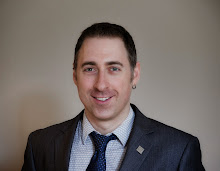
Jeff Geddis - The Interview

I had a really extensive conversation with Jeff Geddis for the article in this month's Outlooks, but with only so much room, there was so much left unsaid.  Here is the interview, where Jeff talks about being a working actor in Canada, the Canadian film and television industry, and more about his role on Sophie.  One of the things I consciously avoided in this interview was the kind of thing you might find in OUT or The Advocate, where the interviewer immediately has to establish the actor's sexuality, and frame the interview around that.  If I was going to write about a gay character who was representing the maturation of the way gay men are portrayed on television, I might as well also show the maturation of writing about said portrayals.  On the whole, Jeff was a fantastic interview, and great to talk to about all of that range of subject matter.

Q: Give us a little bit about your background.
A: I’ve been an actor based out of Toronto for coming up on ten years now, a graduate of York University’s acting programme. Graduated in 1998, which feels like a million years ago now. I’ve been a “working professional” for coming up on ten years now, done everything from popular TV commercials to bit-parts in feature films, to lead roles in MOWs, to guest spots in other TV shows, and then of course most recently the part of Matt on Sophie, and I also play a regular role on a show called The Latest Buzz for the Family Channel, and I’m currently working on an animated series called Stoked which will be on Teletoon. So I’m kind of multitasking these days. Whenever I have two or three days off with Sophie, I’m sort of whisked back to Toronto to do a day or two on my other two shows. It’s been good—I’ve been very fortunate in that respect, it’s not often that you can manage a schedule like this, but I’m losing years off my life and my grey hair is getting greyer, but I’m managing—barely.

Q: Why Matt? What drew you to that character?
A: At the risk of sounding boring, it’s simple that in the professional life of an actor in Canada, opportunities present and sometimes you respond well to the material and other times not, and generally when you do respond well to the material and deliver what they’re looking for then you’ll be lucky enough to be hired. With Matt, it was just something that I found—I found Matt to be a very charming character, and I tend to gravitate towards those characteristics in any of the roles I play. It’s a little bit quirky which is kind of fun—those are some of the things that I responded to. And I think generally speaking I just kind of ‘got’ the tone of what they were looking for, for the show, and so the rest is kind of history. Here I am, I think a year-and-a-half later—I think we did the pilot in 2006. It’s just been a matter of trying to finesse the performance and pay attention to what the writers are looking for, and again the tone of the show, and keep delivering what they’re looking for.

Q: What about your approach to playing the character? Is there anything in particular that you wanted to bring to it that necessarily might not have been in the material?
A: The biggest thing for me is that I wanted to make Matt very real and relatable. I think we see all kinds of presentations of gay men on television and in film, and there are some stereotypes that we see, but for the most part I wanted to keep Matt to just be as relatable as possible to just about anyone watching the show, be it gay, straight of otherwise. I wanted to just get it right down the middle and I think I’ve managed to do that pretty well, and I think the response has been pretty favourable. I think Matt is generally a pretty positive person who is a positive role model in Sophie’s life, and this is something that we’ve been trying to maintain.

Q: That was one of my observations watching the show is that it escaped most of the obvious stereotypes, and that was something I really enjoyed about it. A lot of sitcoms get lazy in their writing of gay characters and you become the sexless best friend or just someone for a wisecrack here or there, and Matt seemed to escape that while still being a funny and, like you said, relatable character.
A: I think we definitely touch on some of those characteristics that you mentioned, but I think it’s much more thorough than that, and we give a real living, breathing person with a real pulse who’s got all the same challenges and desires and interests and flaws and positive characteristics that everyone has. I think the sexuality factor in a lot of ways almost plays secondary to who Matt is, and I think that’s a really important thing in our culture now is to try to take the focus off sexuality so much anymore. I think it’s really important to just [see] ‘who is the person that we’re dealing with here,’ and I think that’s been something we’ve been pretty good at focusing on. Again, it doesn’t just fall on me, it falls on everyone—the writers, the overall style and approach to the show and the character in general.

Q: One of the other things I noticed was that they did a very straight-down-the-middle treatment of Matt’s relationship with the neighbour, Verner. It wasn’t just hinted about or seen off-screen, it was actually there and matter-of-fact and not played coy with.
A: Yeah, I personally think that’s a really good thing. I responded really well to that when we first saw the scripts for it. It’s a relationship, and this is a character who’s going to have relationship ups and downs like any other person, and it’s just something that ‘it is what it is,’ and we made it real, and we had a lot of fun with that storyline, and I think it’s something that people responded really well to.

Q: I also liked the way that, in the episode after Verner was introduced when Matt went and had his ‘affair’ on the side, it made it much more relatable to a gay viewer because it wasn’t so moralistic in the treatment of ‘oh, you’re just playing him as the stereotypical promiscuous character’—there was depth and nuance to it.
A: I’m glad—just hearing you say that, you don’t get that many direct reviews, so I’m really happy to hear that’s how it came across because that was really important to us. I think to your point about the stereotype of promiscuity in the gay culture, it’s in all cultures—people have question marks, they have second thoughts, they have second guesses, we have something called ‘cold feet’ in the world.

Q: That’s part of how the whole concept of Sophie came about.
A: Exactly! And as you’ve noticed in the show in general, the whole premise of the show is built on that. Even good, strong, heroic characters are going to have dilemmas, they’re going to have moral dilemmas, they’re going to make choices sometimes that even the viewing audience in its entirety won’t necessarily agree with, but that’s the whole point. You’re supposed to challenge people, you’re supposed to present ideas that a lot of people, whether directly or indirectly can relate to. I think that’s really important. Going back, this is a show that’s based on a French show, and again the relationship is really strong in that version as well, and it’s just something that plays really well on the screen, and I’ve watch the French show myself and I responded really well to the way that the character was portrayed and the way that relationship with Sophie was built, and I think that it was just a really positive example of modern TV writing.

Q: Being as the show was based on a French predecessor, how much has that influenced your portrayal of the character?
A: You should watch it—it’s really, really fantastic. I only understand about thirty percent of it, but on a personal basis it’s a really, really well-built show. It’s a one-hour, so the difference between that show and this show, is that it’s a one hour format so it has time to kind of pace out and explore side storylines and some of the surrounding characters a little more, whereas our show is a half-hour and it’s a bit more of a punchy-style of comedy, so it’s more just based on the original Sophie, so it plays more to that format of a half-hour comedy. The characters are a little more broad, we’re playing to the comedy a little bit more, and we all centre more around Sophie in this version of the show. In terms of what influences came from the original show, almost none at all. I didn’t even see the original show until we were pretty much completed filming the first season of our show. It was more just for curiosity’s sake, and it’s good in a way. I don’t think any of us wanted to set out to mimic something that was already there. We just wanted to make it our own. As far as building the character of Matt in the first place, obviously I’ve got a few images in mind of good friends I’ve spent time with over the years, and small characteristics that you’re charmed by. It’s like any role—you bring to it what you know and what you understand, and your experiences, and hope that it can all blend into one little presentation.

Q: You’ve said the response has been fairly positive so far. Can you talk a little more about some of it that you’ve had?
A: Just in general, the feedback that we’ve had from focus groups and from the audiences is that they’ve responded very, very well to the relationship between Matt and Sophie, and it’s a true friendship and it’s a truly thorough, supportive relationship. That’s been the response, and that’s what we set out to create and in that sense we’ve succeeded, and they just really believe the two of us as friends. I think it’s the kind of friendship too, that—these are people in their early-to-mid thirties, and there are so many challenges that come with that—anything to do with work, relationships, we have a single mother, all this kind of stuff, and people, they bought it. They really believe that we are two people who are weathering the storm of life together. That was in general, that’s sort of the main response, so that to me felt like success.

Q: Anytime I read an interview with an American actor who plays a gay role, they talk about the flood of fan mail from all these kids in Middle America who thank them for helping them come out to their parents, and I’m wondering if you’ve had that parallel experience?
A: I haven’t! I have not had that parallel experience at all, and I don’t know if it has anything to do with our culture being a few steps ahead in that respect to begin with—I’m not sure. I would be happy to receive any kind of feedback like that, but as it stands, I haven’t, and again if a positive portrayal of a gay character can help someone’s who’s struggling with their coming of age or coming out to their parents, I think that’s terrific. Maybe it has something to do with the fact that our core audience is maybe a little older, I don’t think we’re necessarily targeting a younger audience, I’m not sure if that’s a factor.

Q: Do you think that might change once it airs in the States on ABC Family?
A: Yeah, it’s very possible. It’ll be really interesting to see how we roll forward once that happens. I mean, we play to a pretty small audience—Canada only has thirty million people—so as soon as it hits the States, you’re going to be hitting a larger audience, so it’ll be interesting to see how it’s received.

Q: The new season—how’s that going so far?
A: It’s going really well. It’s like any TV show, I think you do a little bit of finding your feet in your first thirteen episodes, and we’ve been picked up for eighteen this time around so the morale is really high right off the bat. The scripts have been really strong, and everyone had the benefit of the first season to get to know each other and get comfortable, so now it kind of feels like it’s in you—you’re no longer trying to find it. You feel strong in the character, and you feel like the show is being written for what you’ve brought as opposed to you trying to find what’s already on paper. That’s a fun feeling, to know that every script I get now is being written for me, whereas the first half-dozen episodes of season one, it’s just me trying to meet them half-way and now it’s more symbiotic.

Q: I know you’ve done a lot of writing projects on your own—any interest in doing your own scripts for Sophie, or are you content just to be the actor on this one?
A: I think in this case, it’s television and I don’t know if television is really my forte. I’ve done quite a bit of writing over the years, but it’s mostly feature-film format, so I don’t know that I would ever feel as confident writing for the half-hour TV world, but it would be fun and any chance I get, I’m always throwing ideas or suggestions—I’m the guy who’s always raising his hand at meetings, asking questions, making suggestions, making sure that everything is consistent, and making sure that everything works for what we’ve built so far.

Q: I take it the response has been pretty good to that kind of input?
A: Yeah, we have a great writing team on that show, and it’s a real team environment. It’s nice, and I think anytime you do get on a show that seems to be working the one characteristic in common is that everyone is really joining hands and playing it like a team as opposed to anyone ruling over anyone else.

Q: You’ve been a working professional for ten years, and you haven’t gone off to the States, and I’m wondering a) why didn’t you go away—and it’s not a bad thing, but it’s something I’m always curious about, and b) your take on where the industry in this country is at right now.
A: As for the a part, why didn’t I go, I actually did spend a bit of time in the US about five years ago just to kind of explore and see what it was about, and I had worked on a few MOWs and projects that were popular in the US, and so I got some representation and spent some time down there, and strangely, on a personal level I didn’t really find—you’ve got be careful not to say anything bad about the United States—but the one thing I learned about myself is that I spent some time in LA, and I spent some time after that in Vancouver, and there was a stretch of time where it became apparent to me that the place I live, that the home I make for myself, is much more important than I ever thought it was. I just had this thought in my head that I would just pack up and go off to the States and never come back, and it didn’t really feel like the right fit for me, it didn’t feel like home for me, and I didn’t want to stay there and put in the time and do the grind—I mean, there’s always a bit of a grind involved, and I thought if I’m going to be doing that, then something felt more right about Toronto for me. That doesn’t mean I won’t ever go to the States, but as far as where I want to base myself is that I do want to stay based in Canada, and I think I had a renewed appreciation for Canada being away for a stretch of time, and I knew that I wanted to take that renewed energy and enthusiasm about the country that I live in and I really wanted to find myself working more in Canadian projects, and lo and behold not long after that I was doing almost entirely Canadian work, so it was kind of interesting how that played out. Since that time—I just love this country, just seeing politically what goes on around the world, I just really love where we are and I think that we have very smart, interesting writers and we have really strong, talented actors in this country, and I think that it’s unfortunate that we have such a small population because we have a lot to deliver, and I just want to be a part of that. The last couple of years, I’ve really just been putting my energy toward that, just really trying to contribute to making really good Canadian TV and film. To your second point about where the industry is heading, I think we’re in a really good place. We’ve got shows like Flashpoint that debuted simultaneously here in Canada and the US to great numbers, and the CBC had a couple of shows—our shows and The Border last year which again people responded really well to, and I think that it’s exciting and we need to keep doing it, we need to keep forcing and making it happen, and at the end of the day, audiences will watch what’s good, and if it’s good, people will talk about it, marketing will happen, people will pay attention, and before you know it, you’ll have a long-standing audience.

Q: One thing I always hear about is the lack of a star system in English Canada. Being as you’re shooting in Montréal with Sophie, I’m wondering if you have any different experience with that versus shooting in Toronto.
A: One thing I have noticed is that Québec in general has an enviable situation. I’ve never worked in Québec before this job, and I find I’m envious. They have a strong culture here, and it’s quite—insular in a way. It’s not necessarily that they’re watching things from France. Their audience watches their shows here, they make great TV, and they have great viewership, and they have a small star system and they really do have their own thing happening here in Montréal. Being from English Canada and knowing that just south of the border that people walk and talk and think and act quite similarly to the way that we do, so of course you have the option to watch a CBC programme or you could flip over to another channel and watch an NBC programme. So here, it’s just amazing—I didn’t realise it until I saw it first-hand that the practitioners here are really amazing, and the local culture really responds, and the they do have stars here and they have a completely amazing, singular TV and film world here that I didn’t realise existed. I wish we had a similar thing in English Canada, and again we have the US situation right there, and it’s about options. I guess if we could find a way to get patriotism into the eyes of the TV viewing audience it would be helpful. We’re really quick to criticise the US on their politics and their world relations but they don’t think about it when they flip over to watch CSI instead of The Border.

Q: I’m just wondering about some of your other writing projects.
A: I wrote a book sort of like my list of things I want to do in life, and it has yet to be published so it’s not something I go on at length about. I’ve written a bunch of screenplays with a writing partner I’ve been working with for a few years now, and we’ve had a few things in development, a couple of near-misses and a couple of “almosts,” but we actually have a film that should be getting made in early 2009 if all goes according to plan, which is like a feature-comedy, so that’s exciting. It just adds another variable, trying to manage three jobs plus writing scripts, it’s pretty interesting life, I don’t have a lot of time for anything else. But it’s a passion, and it’s something I’ve been working with for quite a while now. It’s funny—I used to think that acting was a difficult professional path, but writing is probably more so. I think you have to really love it to keep with it, and like anything over time, it will start to pay off. 

On how writing and acting intersect
Being a writer myself, I write a character and I get an idea in my head and somebody walks into the room and they’re a brilliant actor and they weren’t what I was thinking, it’s nothing against them, it’s just that you’re not right for the guy that I wrote. The thing is that’s really important for younger actors or people who are really struggling to understand that.

Nancy Ruth's Panel Extras - October

For this month's Thoughts From The Hill panel, I didn't really have too much added to ask the panel, since their feelings on the campaign were some twenty days ago now, which might as well have been an eternity.  But there was one thing that I was curious about, which our obliging Senator answered.

Q: Being as we’re in an election—what does a Senator normally do during an election? Are you campaigning on behalf or others, or are you organising?
A: You campaign on behalf of others, you go out and you speak at coffee parties, you support the candidates and stuff like that. You can do door-to-door as well, but I sprained my ankle this summer and my foot’s in a cast, so I’m not doing that bit of it. Various Senators do different things. Marjorie LeBreton is big-time on the campaign [on the plane].

Monday, September 29, 2008

'The Border' Extras - The Wesley Wark Interview

My final interview for the article on The Border was with renowned expert Wesley Wark.  In some ways, Wark was a great interview because he took the opposite interview that Littlewood did in many cases, and in fact, he wasn't much a fan of the show.  On the other hand, I thought that many of his criticisms were unfair because he had only seen the two screeners provided--episodes 201 and 203--and hadn't seen how many aspects of character development (which was one of his complaints) went over the broader scope of the season.  As well, I think that had he seen 108 as Littlewood had--or even gone to the website to look at the episode synopses--some of his criticisms may have been a bit more tempered.  However, as he was able to participate at almost the last minute was greatly appreciated.

Here is more of what he had to say:

Q: First impressions?
A: I found to be honest, The Border to be a little bit of a disappointment, and I say that for a couple of reasons. Partly because it strikes me to a certain extent it’s unnecessarily imitative. Where’s the imitation coming from, what’s the model? Well, obviously if you watch the program any of its segments I think, you’ll feel some similarity between The Border and its more famous American cousin 24. Similarity in terms of the pace of the action, the subject matter, the sense that it wants to situate the program in the kind of contemporary security environment and draw some energy from that. Similarity down to some of the circumstances, life circumstances of the character. In 24, we have Jack Bauer saddled with a troubled daughter, a problem child. In The Border, we have a similar circumstance, the lead protagonist, the agent who is in charge of this fictional unit ICS, again sort of has a sort of problem child daughter who pops in and out of the segment. Imitative and to some degree perhaps its trying to feed off a successful formula in the United States, which is an understandable calculation, but I think that it could have had a little more spark of the new. It is certainly a fast-paced program, but in a way it’s not just imitative but disappointingly formulaic from my reading of it—maybe I come at this with too high expectations. But if you think about the history of this genre if you like, and what we’re talking about are television programs or movies that try to take up the themes of spying and counter-intelligence and security work in general, there are really two paths to follow that have been set down in the history of this whole enterprise. One path really goes back to the unbelievable success of the Bond franchise. What is the Bond franchise, from its earliest moments in the 1960s on to the present? Well it’s something that emphasises the kinds of fast-paced, adventure, high-tech gadgets of the world of spying, unbelievably successful in doing all that, and it’s evolved over time but the essence of it is unchanged from the very beginning in the sixties. The other alternative pathway to success and interest in terms of producing a cultural product, trying to imitate the reality of spying security matters is the LeCarré franchise, going back to the first and most important of the LeCarré films, which is The Spy Who Came In From The Cold which is much more cerebral, much more thoughtful, and much more concerned with the complexities of the world of security and intelligence and with moral dilemmas and in fact with character and plot development, and I would say—I mean I’m not in the business so it’s easy for me to stand on the outside as an academic observer of this—that the twenty-first century gambit to make a successful program like The Border is to know the history of the genre and say to yourself if you’re the scriptwriter, producer, director, any of the main characters, is that what we want is some interesting Canadian blend of what makes both of these different kinds of models tick. So let’s have lots of fast-paced action, and let’s have a good amount of technology, and a good amount of thrill and some degree of glamour and some degree of romance, and let’s get that from the Bond franchise, but let’s also take some part of the LeCarré franchise onboard as well. Let’s make it a little cerebral, let’s make it a little morally conflicted, let’s make it a little complex, let’s show some of the Machiavellian world of politics in this particular realm of high politics, and I would measure The Border in terms of how well it does that, how well does it blend those two things, and I would say that I can see some degree of effort on the part of the creators of this program to do that, but if it has a future I would say that’s a work in progress. It could use a little more of the cerebral side, the LeCarré side of things. It could use certainly a larger discussion of the kinds of moral dilemmas of the work. It could use more character development, and it could certainly use better dialogue. I mean, the dialogue that you get from The Border is not really even a compromise between development of the characters and the need to push the plot forward quickly and to emphasis the beat of the program and action of it. You just don’t get a lot of dialogue, and I think to be honest that’s a bit of a failing of the program, and to a certain extent suggest that if what it’s doing is trying to find some contemporary blend of Flemming, LeCarré and sort of feeding off of 24, it’s just not managed really to take that heritage and really turn it into something impressive and to a degree new.

Q: The issues that two episodes raised were stop-loss as a border security issue, and drug trafficking from Africa. In terms of the way that show raised the issues and explored them, how well do you think it fared in comparison to how shows in the genre do in other countries, like Spooks of 24?
A: It’s an interesting question, and obviously what The Border is trying to do is feed off the contemporary security issues. It’s chosen good subject matter I think to do that. The issue of the difficulties that are created when American soldiers trying to essentially desert from the US armed forces and come into Canada, I mean there’s a real contemporary resonance there and some really high-profile cases that continue to be contested in the courts about how our immigration and refugee process is going to handle such American deserters and whether we’ve forgotten the legacy of what we did in fact during the Vietnam War, so that’s good by all means, that’s a great subject to explore. Equally in terms of drug trafficking, not only is this a real-world concern for ICS’ contemporaries, who are essentially the Canada Border Services Agency, but the kind of thing that suggests the very dangerous criminal underworld run by gang king-pin members, ruthless and violent, equipped with all the toys of the trade—armoured cars, body guards and the usual kinds of high-powered weaponry and so on—all of that is fine. What it seems to me is missing in The Border even compared to commercially successful variants of this in the US and the UK, both longer-running series, is again that sense of just deepening the issue a bit, giving us more of the complexities of it, making it a little less caricatured, giving it more of a sense of what is going on in the minds of those on the Canadian side of this problem who are trying to tackle this issue. It really has I think sacrificed a lot of what I think we can legitimately expect to see, which is character development and dialogue as part of anything that’s going to be successful by way of a longer-running TV series. So to sum all that up, I would say that the choice of subject matter is perfectly good and the ways in which in general they portray these threats from drug traffickers and this kind of thing is also close enough to the reality, but it is really in the way that it situates the response of this Canadian unit, its principle protagonists, unfolding the action without really giving us the thought behind the action or the morality behind the action, or any of the constraints behind the action. I think it’s notable in terms of the drug trafficking episode that we have a supposedly Canadian outfit which is not all that concerned with what we would say are the laws of Canada at the moment, so maybe again feeding off of 24 a little bit in the sense that it can bend the laws to its own interests, but we don’t have the right in Canada to hold people at the will of any particular law enforcement agency for as long as it takes them to decide whether there’s a case against such a person. And I thought it was a little bit funny that The Border is in a way trying to play off Spooks arguably by presenting us with this rather Machiavellian but certainly attractive British secret agent who sort of swims into the plot and kind of confounds her Canadian competitors. It’s an interesting little take, but I think that the work that The Border has ahead of it again is to give us more of the cerebral side of the work, and give us more of the realism of the landscape. The trouble with these programs it that it suggest, and it’s often said either with regard to 24 or Spooks, it’s competitors—these are interesting scenarios that it’s presenting us with, but it’s also wanting us to believe that these are real-life scenarios, given the kinds of choices of topics that they’re dealing with. Well, give us more real life. Give us more a sense of where political decision making comes in, where the laws come in, where the calculations come in. Give us more of a sense that these things don’t operate in a tiny self-enclosed and perfect world in which information flows very rapidly and everybody is on top of the game, and everybody can move out on a moment’s notice. One of the things in which I think 24 has a lot to explain itself for is the notion that these kinds of operations run on a clock like this, and that the speed and pace of these operations is of this nature—that’s not the reality. And because they’re so wedded to that notion that everything has to be so fast-paced, they’ve left themselves no time for dialogue, character development, moral complexity, or any kind of intellectual complexity in the program. And maybe they feel that there is always this commercial calculation that you dumb-down these things in order to make a good piece of entertainment, but at the end of the day, that argument always boomerangs in terms of the long-term survivability of a program like this. People just won’t come back to see it if they know that all they’re going to expect is another fast-paced episode that at the end of the hour, is not going to leave them with anything but a sense that something has zipped across the screen and in front of their eyes and has left nothing behind. I think that The Border is a kind of fascinating idea in that it’s trying to bring a discussion of the world of security and intelligence and the complexities of Canada’s position in the world, living opposite the United States on a border that the Americans are determined themselves to reinforces and stiffen. It’s a great idea and a great vehicle for discussing issues and indeed for producing a kind of action drama, but the ideas I think are what’s missing so far in sufficient degree.

Q: About that discussion that it generates—how well do you think it contributes to it?
A: My take on this is from an academic perspective. I’d have to say that I don’t think it contributes anything to the discussion, partly because I don’t think that it’s interested the discussion, it’s interested in exploiting a concern and a fascination with security and intelligence matters and the border, and I think that the most obvious dimension of this in that you have good guys and bad guys as you must in programs of this kind, but that the good guys and bad guys aren’t very interesting in terms of how they’re profiled. The bad guys in the program are not just the villains but their also this rather Machiavellian CSIS agent who’s constantly trying to undermine the work of the chief of ICS, and to be honest, this is pure caricature. Now it may be what the producers, directors and scriptwriters believe is the reality, but someone has to say ‘man, this is just pure caricature, give us something more interesting than this.’

Q: I was speaking to one of the writers and producers and she was saying that they do have someone high-placed in CSIS who is now consulting with them to try and gently correct some of their misapprehensions, although some people from other agencies have said that there is someone that rather resembles Agent Mannering in CSIS that they rather hit on quite accidentally.
A: The thing that makes these programs difficult, and the thing that is a challenge for producers, scriptwriters, directors and the rest is that modern intelligence services consist by and large of people sitting behind computer screens trying to assess an immense flow of information. There’s not much room to be honest for rogue agents out on the streets taking the law into their own hands and coming up with their own Machiavellian schemes, and CSIS describes itself as one of the most heavily reviewed agencies among all its worldwide counterparts. The problem is this is how we like to imagine CSIS, we like to imagine these very powerful, very nefarious kinds of characters who are out disturbing and roiling our sense of how Canadian democracy works and so on. Reality is very different. Reality, though, can be interesting, and I think that anyone who works in this field either from a professional or academic perspective will tell you that truth is in this world, always more interesting than the fictional variant, so get a little closer to the truth would be my suggestion for the makers and creators of The Border and give us a better sense of what is the real dilemma for an agency like CSIS, which is how do you separate truth from fiction, how do you really know what’s going on. It’s not like they have a Machiavellian notion, not that they’re out their plotting and conspiring—they’re struggling with trying to understand what the hell is going on, and a program that could even begin to approach that issue would be a more fascinating program. But I suspect that we’re stuck with the caricature, because it’s so deeply embedded in our popular culture sense of what espionage is all about.

Q: How did you think that the fictional agency stood up?
A: The fictional agency is pure fiction, but what would you expect? One of the difficulties I think that people confront is that you can’t have too high expectations about matching fiction against reality, and in some ways I would say that the entire genre is about anything to do with the popular culture of security and espionage, counter-terrorism and the rest. It’s not really about imitating reality, it’s coming up with an interesting kind of parallel universe that’s imagined that has enough connections with reality that it can be interesting but it is a parallel universe. As a parallel universe, as an imagined world of border security, it just doesn’t partake enough of reality by giving us the complexities. It makes it all, if you like, a little too easy. It’s all a little to self-enclosed, hermetically-sealed and too fast-paced and too high-tech, and what it doesn’t get is that all kinds of problems will emerge, all kinds of complexities will emerge, all kinds of screw-ups will happen, and that the really interesting thing that could be exploited is the nature of those problems, challenges, complexities, screw-ups. So somehow to get, and this is where I think that The Spy Who Came In From The Cold is quintessential classic Cold War spy film, has a lot to teach a twenty-first century series of this kind. Give us a complex plot, give us conflicted characters, unfold that plot in such a way that it’s not so obvious where it’s going. Don’t be quite so worried about the pace of action—viewers are smarter, more tolerant than you might think. Mix in a little more complexity, and at the same time, you’ll mix in a little more reality.

[Reviews the episode synopses in the press kit]
A: I think what the line-up suggests is that they are trying to cover some of these issues that a real-life border security agency has to deal with, so they’re trafficking in the reality. There’s the strong pull of the cop show and the crime themes, and maybe you could suggest that there’s a little desire to steer away from some of the sensitive issues that might impact on the ratings? Where in all of this do we see any kind of treatment of a terrorist threat?

Q: They did a couple in the first season.
A: But it’s kind of drifting into the purely crime side and where do we really see the intelligence side of things, counter-intelligence, intelligence operations? It’s part of the colour of the program, but it’s not really part of the plot. Partly because maybe a CBC program, government-funded organisation, a potential Conservative government coming into a majority, not necessarily favourably disposed—maybe there are topics that it has to be a bit careful about, but it also has to have the courage to push back a little it against what it might imagine to be political stricture. So I think kind of a mixed message in the next season apply now. Some topical issues being addressed, but at the same time, there are maybe a few topical issues being shied away from, and always that concern that a program of this kind is just going to be dragged into the banality of a cop program of which we’ve seen countless examples. The Border is not going to win over an audience from Law & Order, who are going to watch the re-runs before they watch The Border, so be careful of the magnetic pull of a cop show, but it’s a work in progress, and from my perspective, if they can just get the balance right between the Bond franchise model and the LeCarré franchise model, they’re onto something that could be a winning thing.

'The Border' Extras - The Jez Littlewood Interview

I was quite glad to get someone of Littlewood's stature for the interview, and for him to take so well to the series despite his admission that he's not much for television.  Littlewood had a chance to review episodes 108 and 201 for the interview, and I think that 108 was the one that impressed him the most, which is why I suggested he watch it on top of the screeners sent.  It was also a relief that he had an understanding of what realism needs to be sacrificed for the sake of storytelling, which put his comments into a much better context.  Here's more of what Littlewood had to say:

Q: Overall thoughts?
A: One thing that struck me, in some ways it’s more sophisticated than I might have thought. My view while I was reading it was that this is definitely not an American-made TV series, partly because you have get debates or discussions characters are having, there’s nuance in issues, there’s some reference to history in issues, there’s dialogue between characters that’s not necessarily central to the plot but it’s an interesting side point. It’s politically as well, it’s quite up to date. I don’t know the timelines between production and final screenwriting, but I was struck by okay, it’s quite up to date. Overall, I thought it’s actually not bad, not bad at all. It gives a flavour of some of the main issues there, the tensions between bureaucracies, the importance of having to consider politics in decision making, but it’s also as you would expect in the one sense a very simplified structure. The idea of virtually no liaison between this group and other agencies and organisations in Canada—you never see that apart from the occasional dropping-in of the single CSIS character. You don’t see this individual really having to report upwards or get instructions from his upper management team, whoever is in charge of his organisation. The direct dialogue with the Minister, which is kind of possible but not quite actually because it would involve ADMs or DMs usually.

Q: One of the things that wasn’t really in either of those two episodes was that they actually do have a Deputy Minister character who often will call down from Ottawa, and he’s usually the one who gives instructions or tells them to back of a case, or something.
A: Exactly, and that’s a key sort of power point in the reality. I mean, obviously there are all sorts of other TV-friendly sorts of issues. Everybody has nice offices overlooking nice places. Government buildings don’t generally look like that. There’s also a sense of rarefied—everyone you need is in your team, so you’ve got your computer IT expert there, literally just at your beck-and-call, and it’s just like well no, we live in competing resources kinds of environments. Yes, you can have a specialist attached to you, but it’s not necessarily that kind of simplified. But it’s entertainment, it’s trying to tell its audience something as well as be entertaining and tell a story, so you’re going to have to knock off some of the less-attractive edges of reality. That’s one thing. There was also a couple of—in fairness, I’m only dealing with a couple of episodes—but certainly in the episode dealing with the terrorist plot, they were pretty lax with the whole sharing of information thing. They had the Imam in, ‘do you know these people?’ Now in a time-sensitive thing I can see yes, they might do that, sharing photographs of individuals, not necessarily saying why they’re interested. But having conversations while somebody who would probably not have any clearance whatsoever is in the room, even if you’re in another corner of the room or a door, no. Not even with real time-sensitive information. When the guy got called down to reception to see [Yvonne Castle], and the baby was crying and she could hear it—yeah, that really wouldn’t work in a government building. All these things are kind of necessary and adds to the TV plot, but it can give it a false impression. But in fairness, from the two I watched, I thought ‘this is really quite politically savvy.  Yes, it’s simplified, yes it looks nice, yes things are difficult but run smooth most times in the end, but there’s nuance in there, there’s a recognition of difficulties in different interpretations of views or political views of the characters. It’s not this straight line, ‘let’s sell this and no punches are pulled’ attitude, which I thought was quite good. It kind of reminded me a little bit—I was trying to think ‘what are my reference points?’ Have you ever seen the BBC series Spooks?

Q: Yeah.
A: It reminded me a little bit of that, and differed greatly from the equivalent in the US, say 24. They were going to be my two reference points. At least there you see there’s a team—there’s a team effort within a government effort, whereas in 24 it’s an individual world saving the United States of America. And Spooks has that kind of same—it’s a team who seems to exist and do everything on their own without necessarily too much interference within the bureaucracy, the head of that team deals with ministers and governments and everything else like that, and you get that same picture here. The reality is, obviously there’s more fingers in the pie and more complex reporting structures, but that does not make for entertaining television.

Q: In terms of the kinds of issues that it raised, you watched one on a terrorist threat, and one on stop-loss as a cross-border issue, one in which we’ve got a lot of press right now with war deserters with deportation orders and so on. Judging from that particular aspect of how the issues are being looked at, how did you feel the show handled it?
A: I think they handled it reasonably well. I mean, the terror attack was—I thought it was going well until I realised they were dealing with anthrax and they really went for the big scary ‘what might these terrorists do’ which was a bit playing to the TV gallery, whereas a truck bomb or something else would have been more realistic based on actual terrorist methods, or maybe a suicide bomb or something like that. But the tensions between—there was a reference to okay, there’s an imminent attack, and one of the characters—I think it’s the CSIS character—says ‘oh, I got bored after the fourth imminent attack didn’t happen,’ and those kinds of things, and there is that sort of thing that you can see that. There was a reference at least that one of them said that Canada is overdue, and you do have that feeling here in one sense. Canada has been named since at least 2002, and if you look at everyone else who has been named in that note coming out of al-Qaeda or statement, everyone else has been attacked, Canada has yet to be—so that’s where I think it’s kind of politically savvy and up to date. The connections in the terrorist one between what was going on in Toronto and the neat connection with what was going on in Afghanistan with the two held soldiers was a nice sort of, it wraps it up for the TV. Having to make the trade-off in the end was I thought quite an interesting addition. The woman goes to jail, the warlord’s son gets sent back to Afghanistan with the child and he was going to be persona non grata in Canada anymore, and that’s the deal—that was kind of interesting. Saying that yes, it’s a murky world of there has to be a deal here—we get two Canadian soldiers alive, and suspected terrorist gets off free and goes back to Afghanistan. So that was kind of interesting I thought. Dealing with the stop-loss one, that played quite nicely I thought with the psychological aspects. There’s a number of things reporting in the press with different parts of the media from Time magazine to Newsweek, to I think the New York Times has also done a piece in the past eighteen months of the US military’s trialing of basically unproven drugs to assist soldiers under psychological pressure, and a tension of what happens when that necessarily goes wrong, and the guy leads him across the Canadian border, one of them is responsible for saving his life so he things he’s due. It works out quite nicely. It’s got its fingers on the right pulse, I don’t think it’s barking up the completely wrong trees, and it handles them in quite a sophisticated manner in fairness to it, works out some of the difficulties faced by Canada as well as some of the moral questions and the political realities of issues. I mean I looked through that show when I went to the CBC online to look through the episodes, and I see there’s a rendition flight that crashes, organised crime issue, there’s a drug issue—it touches all the main bases which are of concern to most Western democracies in terms of security issues.

Q: Do you think that it presents a fair face as to what Canada is doing on these issues, or do you think that it’s a bit too idealised?
A: I think that in some ways it can be a bit too idealised, but I think that what’s important is that there’s a sense that we’re dealing with actions within Canada. I think that if we were trying to portray a picture of what Canada is doing outside of its borders, that would become difficult. But it’s quite a clever focus on okay, we’re dealing with things that come into Canada and problems that arise in Canada have to be addressed. It’s a reasonably fair picture. I would imagine that CSIS aren’t too happy with being portrayed as the attack dog of this TV program. I can’t say to what extent other characters who are brought in from other agencies are portrayed, but you have these clearly personal tensions, and there are also bureaucratic tensions. That said, no one who looks at any history of intelligence or bureaucracy in making national security policies in any country can avoid the issue that individuals to matter. If two individuals who are supposed to liaise and work with each other can’t get along, that does affect the overall quality of work. I mean that’s quite a nice point—it may be overplayed, but it is quite a nice point that individuals do matter in these relationships.

Q: I was speaking with one of the writers and producers who said that they do have someone in CSIS who is trying to correct them about their portrayal, but they have people from other agencies who say that it’s a pretty accurate portrayal.
A: It can be difficult when you are the public top-dog, if you like, according to the way people think either politically or within the media, to work with everybody else. And everybody else feels like they’re doing the nitty-gritty work here, and sometimes these people get parachuted in and not always sharing information within or not always getting the full story, etcetera. There are always tensions between organisations in bureaucracies in every country, and it’s not just turf war and jealousy—there are reasons for those tensions, and there are different mandates and different jobs to be done by them. But I would imagine that yeah, CSIS was trying to steer that ship a little more to a fairer portrayal.

Q: The fact that the show created a fictional agency with which to situate it’s main characters. Do you think that enhanced its ability to tell these kinds of stories, or do you think it detracted?
A: I actually thought it was quite clever because you then didn’t have to worry about trying to portray the agency that’s already in existence. You’re not going to be compared to anybody else or another program that involves that agency or organisation, and it avoids having to sort of think about the obvious, ‘we never work like that,’ the agency might write. ‘We don’t do that, it’s an incorrect portrayal,’ so it sidesteps some of those issues. It’s quite a wise move on the writers’ part because they can say ‘okay look, we’ve got this fictional agency within this much broader gamut of organisations and agencies within Canada, and it allows us to portray certain things like different responsibilities and mandates, turf wars, political reporting, how teams work, etcetera, without getting too bogged down in how to accurately portray an existing agency.’ I thought it was probably a wise move, and I think in fairness, based on what I’ve seen, I think it worked. You always run into these kinds of problems, these lead characters seem to be involved in everything, but that’s the nature of a TV drama.

Q: How do you think a show like this contributes to the national discussion in terms of the questions it’s raising like terrorism, border security, immigration and so on?
A: I’m not sure it does, but I’m not sure that’s a fault of the program itself. I’ve found this as someone who’s fairly new to Canada—two years here now—but it’s something that I’ve heard a sufficient number of times from people who have been working in the Canadian security and defence world across all kinds of sectors of government and non-government, who’ve said to me, and I think it’s correct, that there isn’t a security discourse or discussion in Canada that’s active all the time. I think that’s true. What might be interesting here is that if it is classic ‘water cooler TV’ and gets people talking at work ‘did you see what happened last night,’ that might add to the sort of general consciousness and might get people thinking. To the extent that there’s a sustained outcome from that—it’s impossible to judge I think at this stage. I don’t see anything necessarily filtering upwards, but I think it’s early days—it began January of this year. Looking at the awards its won and the reports its had, it could prove useful. If it gets people thinking about security and national security of Canada, it can sometimes be a necessary and compromising business, just as the security of any state can be a necessary and compromising business—that’s a good thing. Things aren’t always clear cut, and that is one thing that it’s good that people can understand that. It’s not always a simple question of what’s right and what’s wrong. Tough decisions have to be made.

'The Border' Extras - The Janet MacLean Interview

I had a terrific interview with The Border's co-creator/writer/produce Janet MacLean, and because there was just too much good stuff that didn't make it into the article, here's a taste of some of our conversation:

Q: You’ve got some really topical episodes coming up in all thirteen episodes.
A: We try! [laughs] We try for topicality, but what we try to do is do the stories that are concerning people about the world that they live in. Whether that’s trying to be topical or not, we try to hit the trigger points for people.

Q: When the show was launched, it came with the tag line of “24 with a conscience.”
A: I’m not actually sure of the origin of that tag line. I think that possibly it was a response to being compared to 24 a lot, more of a reactive tag line because some of our first episodes dealt with terrorism, but from the perspective of rendition, some of the things that were going on that were not very savoury in terms of our response to terrorism. So I guess that’s how that tag line got attached to us. I don’t like it to suggest that we are moralistic in any way, though, we try very hard not to be. The first episode, the pilot, which was about rendition, we had had three or four cases of rendition to Syria here in Canada, and it was written five years ago in a very dark climate, when it seemed that no one was questioning those kinds of practices. No one was questioning rendition, no one was even questioning torture for a while there, and so in that very dark atmosphere, I suppose a bit of trying to do the right thing kind of crept into that pilot, and I’m not sure that it was stronger for it. I think that since that time we’ve tried to be very objective and just tell good stories.

Q: The issues of intelligence and counter-intelligence is something that really never got much pop-culture play in Canada, possibly because you said we’re more of a supporting character on the international stage, and this series is one that’s changing that perspective.
A: One of the things that I really wanted to achieve—we all really wanted to achieve with our show—is to show that the same issues are playing out on the Canadian stage with the same urgency that they are everywhere else. We’re so used to thinking of ourselves as sidelined from these great debates and these great earth-shattering events, and we’re not. And in fact, the more research and the more people I spoke to, the more I discovered just how much we’re not, how in fact all of these things, from child slavery to terrorism, to every kind of international crime imaginable is going on here quite rampantly including espionage—we have something like ten thousand Chinese agents in this country. It’s phenomenal.

Q: And you’re tapping into this now.
A: Exactly! It’s just been waiting for us to start telling stories about. When we first started, we would get a response like [sarcastically] ‘oh, you’re going to have a show about border guards, that sounds exciting,’ but no, we’re telling—I think of it as an exciting police procedural for the global age, because it’s showing where Canada interacts with the rest of the world. On that stage, we are players.

Q: You were mentioning experts you’d talked to—can you tell me a little more about that?
A: We have a connection with CSIS—I don’t think he wants me to tell you his name though—a kind of highly-placed CSIS agent who we speak to. We have a few wonderful ETF and SWAT people that we speak to. We try and pick the brains of people like Misha Glenny, who’s just written a book about the globalisation of crime. I attended a wonder question-and-answer thing with Ahmed Rashid who wrote a book called Descent into Chaos. [Series creator] Peter Raymont, whose documentaries were a sort of jumping-off point, has a myriad of connections through the Canadian government, and as a long-standing documentarian, has a lot of people that he can put us in touch with when we need it. For instance, we’ve just been doing a story on Tamil gangs, and made a lot of use of one of Peter’s sources. It’s not that we try to get it right—we try not to get it wrong, and what we do is we tell stories. They aren’t factual, they aren’t based on any individual case. We know, for instance in the story that you mentioned, we can read books about child soldiers and we all know about international adoptions and celebrity adoptions, but what it comes down to is a good story. It’s not based on any particular story, any particular case, and we try to do it credibly. We don’t make any claims that we are casting light in any detailed way on any of these issues. We’re just kind of opening it up and trying to tell a good story.

Q: But at the same time, telling a story like that is going to bring attention to those kinds of issues.
A: It pushes it into the public forum for sure, and I think that’s what television should do is provide conversation for people who want to discuss the world that they’re living in. It’s a jumping-off point, but that’s not our main goal. Our main goal is to entertain our audience, let them feel that they’ve spent an hour not too wastefully.

Q: And your CSIS contact doesn’t take too unkindly to the fact that CSIS is portrayed a bit more darkly in this series?
A: [laughs] I think that’s one of the reasons he’s so willing to talk to us, because he’s so highly placed, is that he’d like to gently correct our misapprehensions of CSIS. But I have to say that other people that we’ve spoken to in other agencies have consistently told us—and of course Agent Mannering is not based on any individual all, he’s a complete fabrication—but there is someone in CSIS that reminds a lot of people of. [laughs] You’ve seen the one about the stop-loss. One of the odd things that happens to us is that sometimes the headlines seem to follow us around, and in that case, it was the week that we were shooting, and there had been a number obviously—I was just interested because I happened to notice in my neighbourhood that there was a group forming to support American deserters, and I’m old enough to remember American draft dodgers, and this stop-loss thing was a new wrinkle on it because it meant that it was effectively a draft, and while we were shooting, there was the case of Jeremy Hinzman that he was allowed to stay in the country—he was blocked from being deported. I always find it really interesting when we’ve managed to get to a story, to anticipate what’s going to be on people’s lines and then the headlines. And then other times it’s just sheer [luck]. The week that our show about black market organ trafficking hit was the same week that the big black market organ trafficking story with the Canadian connection in India. So sometimes it’s just serendipitous.

Q: And it could also say that you’re on the pulse.
A: That would be nice. [...]  One of the things I was thinking about when I was thinking about this “24 with a conscience” thing is that torture is another factor there. In that 24, as we know, has embraced torture to a degree that alarms even the American military where they were actively trying to get them to tone it down because Cadets were embracing Jack Bauer as a model, and in the one episode where we try to deal with torture in episode 108, we try and come at it from a lot of different directions and not make any definitive decisions, but look at where that line is drawn, and how you draw it. We try examine those things instead of pronounce on them, and embrace them.

Tuesday, September 2, 2008

Nancy Ruth's Panel Extras - September

To round off our bonus questions, here are those from Conservative Senator Nancy Ruth, as well as excerpts from our extended conversation.

Q: What was your highlight for the last session?
A: The Auditor General has committed to doing an  audit of gender-based analysis of some federal departments in May, so for me that was the highlight of the last session.

Q: How are things with the Defence and Security Committee? You’d been doing work with the Human Rights committee, so how is it moving to this one?
A: I did ask what kind of internal change has happened since the Michelle Douglas case [from 1992] in terms of homophobia and monitoring and measuring that, and I’ve never had an answer. I did ask General Natynczyk, just days before he became king, why since they recruited at the Dome Stadium with helicopters and tanks and stuff, why we didn’t recruit at the Pride Parade in Toronto, and he didn’t know the answer to that and lo and behold they all turned out, and some people say they were just gorgeous and cute as hell. But there was no talk within the queer community in terms of what is the implication of having a military and Canada being at war—it was just the superficial ‘oh, isn’t he good looking?’ But I have seen the military’s report on their recruitment that day—they ran out of pamphlets by four o’clock in the afternoon and they were open until eleven. There was a huge number of people, and they ended up with thousand and thousands of names, and they had about two hundred and fifty recruitment possibilities.

Q: What was the low point of the last session for you?
A: The low point to all sessions for me is when we get into playing party politics and stupid little bickering and delays just because we’re playing games—it drives me crazy. It drives every woman crazy—it’s not the way women do business. You’ve got a job to do, you do it and then you go home. They don’t threaten to keep you there another week or whatever. I hate that stuff—that kind of political process just drives me up the wall, and every June and every December it’s the same. Once you get close to wanting to leave for your break, all the games start about a month before.

[Further to the Panel question]:
I have always wondered how it would impact Afghanis when they see that we legitimise [queer] soldiers—I don’t know the answer to it, but it’s something I’ve questioned. It would be interesting to ask, but I don’t know how you’d ever get an answer, if you asked the local Kandahar tribal ruler, what kind of answer would you get?

I also understand that there’s a woman officer in Afghanistan who is responsible for implementing United Nations Security Council Resolution 1325 which deals with women’s peace and security, so it’s her job to push that agenda in the external relations, outside the wire, so it’s probably good. So to guess what kind of impact it is to have GLBT troops would only be totally speculative. I’ve heard stories of other NATO troops coming to our and Australian chaplains where they’re afraid to go to their own.

I was on a naval frigate at the end of June, and one of the corridors I went down I saw a rainbow bow stuck on a file cabinet, so I inquired later and asked if there are many homosexuals on board? And this was in the one-up from the Ordinary Seaman’s level of dining rooms, and the answer in this great conviviality was “Oh, no, we gave him that because he’s so anti-queer, and that’s a joke.” But there was no further discussion of the issue. I can tell you, of the four days I spent on that naval frigate, I did not come out. I did not raise the issue—I was in enough trouble with whatever feelings I had after one of the big anti-aircraft guns went off, and someone said ‘What was that like for you, Senator?’ and I said ‘Well, I’m on a boat with 250 other people who have committed to going off to war and killing people—that’s new for me.’ And then I was not seen as sympathetic to the military. I’m not anti-, but it’s difficult for me. I wish nation states didn’t have these, didn’t have to solve problems through this business. So I was not going to ask queer questions except for the one time that I asked it at that level, and I don’t think I would have believed anything. Senior officers would have said anything because it was a big propaganda thing for them—they had Bob Rae and Alexa McDonough travelling back on the same boat to Halifax that I and [another senator] came up on.

On recruitment:
What I know of the recruitment in the military is that they recruit something like 6500 a year, and Canada’s having a hard time training these folks because all the people who train them, the staff sergeants are all off in Afghanistan. So that’s an issue—how do we stay at war and expand our military? But I also know that the number of people who are leaving the forces, through attrition of either they’ve come to their time, or they’re leaving for family life, is 5500, and it’s only a net gain of a thousand. That’s pretty horrific. Queers without children might be a very good group to recruit from, because the attrition, a lot of it is related to family from what I hear. Except for those who’ve done their twenty years’ service, or whatever.

Siksay's Panel Extras - September

Further to this month's edition of Outlooks' Queer Parliamentary Panel, here are NDP MP Bill Siksay's bonus questions.  Mr. Siksay was the one panel member in town when I was working on the piece, which allowed us a sit-down interview.  He was far less optimistic about how things were going in Ottawa at the time.

Q: What were your highlights from the last session?
A: There’s a couple of things around GLBTT issues, certainly with Tom Lukiwski’s comments was a serious incident in the last Parliament, even if it was something that happened seventeen years ago, I don’t think the government really handled it very well. He appropriately apologised and quickly but there needed to be some follow-up to show that those opinions weren’t the basic beliefs of Lukiwski or the Conservative caucus, and to see some GLBT-positive action on their part, and we’ve never seen that. So that was a dramatic moment and that’s still outstanding. I was disappointed that we haven’t had a chance yet to debate the bill to include gender identity and expression in the Human Rights Act, but I did table another private members bill to add provisions for protecting trans folks in the criminal code so it can be into consideration as a hate crime at the time of sentencing, and hopefully we’ll have a chance to debate those. And if we get to a new Parliament, I’ll make it into one bill and deal with it all at once. The whole question around Bill C-10 and the film and video tax credit has implications for the queer community. Certainly Conservatives are wont to complaint about film and video that reflects our community, so I think that whenever you have a provision that’s as broad and open as the personal interpretation and preference of a minister, around approvals of a tax credit, there could easily be problem, so that was a really important one.

Q: In terms of what you’ve been working on generally, what was your highlight?
A: I did some important work around CBC, and certainly changes to CBC Radio Two and the CBC Radio Orchestra which is an important local issue, and for getting that out and they haven’t reversed that policy but it got some attention. I did some ongoing work on security certificates, and issues that I’ve been involved with again wasn’t a victory but we’ve raised profile around concerns of how Canada is using security certificates and some of the fundamental injustices of the process including the new process where they’re appointing these ‘special advocates’ to help represent these people.

Q: Lowest of the session for you?
A: There are so many low points, but I think in a way the low point is that we’re still here. Despite all of the problems that opposition members have identified with the government, in terms of disappointing directions or problematic direction that they’re still in power. And despite the protestations of the Liberal Party that they don’t agree with any number of specific measures, they disagree vehemently with some of them, there were no confidence votes. I think that we could have gone to an election before, so the fact that we’re still here is an overall disappointment.

Brison's Panel Extras - September

To accompany this month's edition of Outlooks' Queer Parliamentary Panel, I asked each panellist a few extra questions to set the mood.  First up is Liberal MP Scott Brison.

Q: What were the highlights from the last session for you?
A: There’s two things. One—I co-chair the Liberal Party of Canada’s platform committee with Bob Rae, so the last session I spent a lot of time working on policy and platform issues, particularly focusing on the Green Shift. The highlight of the last session from my perspective was seeing the successful launch, seeing Stéphane Dion move forward with the Green Shift. I was very pleased to see a political leader put forward a bold idea and create a national debate—that’s the way politics ought to work.
Also, as industry critic, I was very involved with the whole discussion of the whole MacDonald Dettwiler (MDA) and the proposed takeover by the Americans, and ultimately played a role in building pressure in Canada against it. That was certainly a highlight as well. From an opposition perspective, it was the Liberal Party that kept pressure on the Conservatives to come clean both on the Chuck Cadman affair and the Elections Canada affair, and I think we did a good job on that. I think it’s very important, but the politics that I find most exciting are where you’re involved in the development of new ideas and new thinking, and that’s why seeing Stéphane Dion move forward with the Green Shift is the kind of politics that I enjoy very much, where it’s not just focused on scandal, but you’re focused on an idea that’s important to the country and the future of the country.

Q: I know he mentioned you specifically in helping to change his mind [about a carbon tax], so that must have been pretty gratifying.
A: It’s not gratifying in that sense. I’m very proud of what he’s doing and proud to be part of his team, and I’m looking forward to him becoming Prime Minister because I think that he’ll be a very courageous, and strong, and principled and effective Prime Minister.

Q: Any particular low points in the last session for you?
A: I thought the attack on Navdeep Bains by the government and the Prime Minister was very low. I was really hoping that we could have a constructive debate on the environment, a serious debate about a serious issue, and I was very disappointed in the Prime Minister’s response. The Green Shift proposal has received a positive response from bank executives like the Toronto Dominion Bank Chief Economist, Don Drummond; positive response from economists and tax experts like Jack Mintz; positive response from environmentalists like David Suzuki, and the Prime Minister insults the intelligence of Canadians when he responds to a serious plan by calling it ‘insane,’ or when he takes the goon squad of the Conservative youth, people who are employed by the government, who work in minister’s offices and putting them in silly t-shirts with talking oil spots—it’s really an insult to the intelligence of Canadians. I’m disappointed in what he does to Canadian politics, because Canadians realise now that they can’t expect anything near statesmanship from this guy. But beyond that, he is a Prime Minister who is really bad for politics and for how Canadians view politics and politicians. I think particularly for young people he represents the very worst image that a politician can put forward.

Of course, outside of politics, but still kind of tied to politics, I’m nearing the first anniversary of my marriage on August 18th of last year. In eleven years of public life—my first election was June 2, 1997—I’ve seen a lot of changes and advancements in rights in the last twelve years, and who could have predicted in the eleven years since I was first elected what great advances we’ve seen in Canadian human rights, particularly around gays and lesbians but not exclusively. In politics, quite frequently, you’ll hear people saying that the longer they’re in politics, the more they lose faith in humanity. I’ve found the opposite to be the case, and I’ve found that my faith in humanity has been fortified significantly, largely because I’ve learned that with Canadians, and my own constituents in Kings-Hants, is that if you give them the opportunity to be progressive and to be open minded that they will rise to the occasion. I feel there’s a real responsibility in politics to appeal to people’s better angels, where Stephen Harper consistently tries to bring out the worst in people and try to appeal to their dark side. I think that Canadians are looking for positive leadership that enables them to rise to the occasion, and that’s just a matter of faith in people, and faith in Canadians, and when you expect them to be progressive, by and large they’ll rise to the occasion and that’s what I’ve seen in my political career.

[Further to the Panel question]:
Senator Barry Goldwater in the US, who once ran for President, was the dean of American conservatism, and he was considered a very right-of-centre guy, but he was kind of a libertarian who believed in free people and free markets. I always like the quote that he came up with when Bill Clinton was president and they had the debate about gays in the military, and at the time Clinton came up with the compromise position, which wasn’t really a great position—“Don’t ask, don’t tell” which was really kind of goofy—but anyway, Goldwater came out with a statement saying “It doesn’t matter whether you are straight, it only matters if you can shoot straight.” I thought that was pretty good.

Monday, July 28, 2008

Pride in the Canadian Forces - Deleted Scenes

As with many articles and interviews, there is a lot that can't make it into the final piece. With this particular article, one of my original lines of inquiry--how does Canada's policy of allowing GLBT troops to serve openly affect our allies in places like Afghanistan--didn't yield an answer that fit into the piece in the end. However, this was answered, along with several other questions, in my phone interview with Dr. Anne Irwin (which nearly ran forty minutes). Here are some of the things that didn't make it to the final piece, but which are interesting nevertheless.

On serving alongside the Americans in Afghanistan:

“People have a misconception when militaries operate together. Individual soldiers are not working alongside Americans, and in fact they have very little to do with each other. The combined operations are at a much higher level, and for the most part is the battle group is completely Canadian and they may have a company of Americans attached, or whatever. The soldier on the ground would only run into American soldiers when they were relaxing in Kandahar Airfield, and they maybe once in a while they may have a few units that are intermingled, but that’s really quite unusual. Where it might affect them is at the level of the very senior commanders, but even then they wouldn’t have any contact with Canadian troops really. Having said that, even in Kandahar Airfield, there’s not much intermingling—every nation’s soldiers sits by themselves, not intentionally, but it’s very [cliquey].”

On the oft-cited line about how gays in the military are bad for morale:

“It’s nonsense. There’s a very good article in the Armed Forces and Society journal a couple of years ago analysing the results of the lifted restrictions on the gays and lesbians in the Israeli Defence forces, and their findings were the same as Canada—‘so what?’ All these dire predictions about how it will destroy morale just never happened. People who have an entrenched position as the people who’ve instituted that policy in the US, aren’t going to be convinced by the facts. It wouldn’t make any difference if there were no problems in the Canadian military, and even the research that shows that gays and lesbians serving openly has no effect on morale, cohesion, all that stuff, they find ways to still justify their positions. I’m not sure that even being exposed to an environment that there’s no effect on morale, or that Canadian soldiers are every bit as good as any other nation’s soldiers, they’d find some way of justifying their position anyway. It takes generations of change.”

On whether Canada is setting an example in the world:

“I’m not sure to tell you the truth, but there are other nations that have similar policies or no policies.” [The UK for example]. “That was a hard go. I can remember when I was in England doing my PhD in 1994, and one of my very best friends was a gay guy serving in the Royal Navy Reserve—not openly. Well, he was open in his civilian life, but couldn’t be in the military, but he was always dancing this line where if they found out they could get rid of him. But at that point, it was still very heated subject, but then again they changed the rules and it was like ‘big deal.’ I’m not sure if anyone has done any ‘after’ studies to find out what the results have been.”

On cultural differences in Afghanistan:

“A lot of comments about the Afghan National Army, there were rumours that they were all gay, which of course isn’t true any more than rumours that all the guys in the infantry were straight, and some of that is a misunderstanding about cultural norms about physical affection and what’s sexual and what isn’t.”

On women serving on the front lines:

“It’s very much the same thing [ie--only caring that you do your job]. People used to worry about privacy, but nobody cares. I was there with them, peeing beside them, nobody cares about that. Basically if you do your job, you’re accepted. I get quite upset about some scholars who write about how you have to give up your femininity or be a pseudo-male to be in order to be accepted by the military, but I’m thinking that just because somebody is physically tough or stoic, or wear short hair or no make-up does that make her pseudo-male? It reproduces many of the stereotypes that feminists claim to be challenging, that you have to be ‘like a man.’ Well, what’s a man?”

An anecdote which exemplifies this:

“There’s only one woman [in the company], and these guys are mostly big, tough, stoic, physically very fit and tough guys. And we were sitting around with them, I had only been there a few weeks at that point, and this woman came over and was joking with the guys and we were just about to head out and she said ‘Well, I was brought here to bring some femininity to this organisation’ and the one guy looked at her and said ‘I have more femininity in my little finger than you have in your whole body.’”

Thanks again to Dr. Irwin for the great interview.