Tuesday, September 2, 2008

Brison's Panel Extras - September

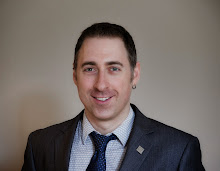
To accompany this month's edition of Outlooks' Queer Parliamentary Panel, I asked each panellist a few extra questions to set the mood.  First up is Liberal MP Scott Brison.

Q: What were the highlights from the last session for you?
A: There’s two things. One—I co-chair the Liberal Party of Canada’s platform committee with Bob Rae, so the last session I spent a lot of time working on policy and platform issues, particularly focusing on the Green Shift. The highlight of the last session from my perspective was seeing the successful launch, seeing Stéphane Dion move forward with the Green Shift. I was very pleased to see a political leader put forward a bold idea and create a national debate—that’s the way politics ought to work.
Also, as industry critic, I was very involved with the whole discussion of the whole MacDonald Dettwiler (MDA) and the proposed takeover by the Americans, and ultimately played a role in building pressure in Canada against it. That was certainly a highlight as well. From an opposition perspective, it was the Liberal Party that kept pressure on the Conservatives to come clean both on the Chuck Cadman affair and the Elections Canada affair, and I think we did a good job on that. I think it’s very important, but the politics that I find most exciting are where you’re involved in the development of new ideas and new thinking, and that’s why seeing Stéphane Dion move forward with the Green Shift is the kind of politics that I enjoy very much, where it’s not just focused on scandal, but you’re focused on an idea that’s important to the country and the future of the country.

Q: I know he mentioned you specifically in helping to change his mind [about a carbon tax], so that must have been pretty gratifying.
A: It’s not gratifying in that sense. I’m very proud of what he’s doing and proud to be part of his team, and I’m looking forward to him becoming Prime Minister because I think that he’ll be a very courageous, and strong, and principled and effective Prime Minister.

Q: Any particular low points in the last session for you?
A: I thought the attack on Navdeep Bains by the government and the Prime Minister was very low. I was really hoping that we could have a constructive debate on the environment, a serious debate about a serious issue, and I was very disappointed in the Prime Minister’s response. The Green Shift proposal has received a positive response from bank executives like the Toronto Dominion Bank Chief Economist, Don Drummond; positive response from economists and tax experts like Jack Mintz; positive response from environmentalists like David Suzuki, and the Prime Minister insults the intelligence of Canadians when he responds to a serious plan by calling it ‘insane,’ or when he takes the goon squad of the Conservative youth, people who are employed by the government, who work in minister’s offices and putting them in silly t-shirts with talking oil spots—it’s really an insult to the intelligence of Canadians. I’m disappointed in what he does to Canadian politics, because Canadians realise now that they can’t expect anything near statesmanship from this guy. But beyond that, he is a Prime Minister who is really bad for politics and for how Canadians view politics and politicians. I think particularly for young people he represents the very worst image that a politician can put forward.

Of course, outside of politics, but still kind of tied to politics, I’m nearing the first anniversary of my marriage on August 18th of last year. In eleven years of public life—my first election was June 2, 1997—I’ve seen a lot of changes and advancements in rights in the last twelve years, and who could have predicted in the eleven years since I was first elected what great advances we’ve seen in Canadian human rights, particularly around gays and lesbians but not exclusively. In politics, quite frequently, you’ll hear people saying that the longer they’re in politics, the more they lose faith in humanity. I’ve found the opposite to be the case, and I’ve found that my faith in humanity has been fortified significantly, largely because I’ve learned that with Canadians, and my own constituents in Kings-Hants, is that if you give them the opportunity to be progressive and to be open minded that they will rise to the occasion. I feel there’s a real responsibility in politics to appeal to people’s better angels, where Stephen Harper consistently tries to bring out the worst in people and try to appeal to their dark side. I think that Canadians are looking for positive leadership that enables them to rise to the occasion, and that’s just a matter of faith in people, and faith in Canadians, and when you expect them to be progressive, by and large they’ll rise to the occasion and that’s what I’ve seen in my political career.

[Further to the Panel question]:
Senator Barry Goldwater in the US, who once ran for President, was the dean of American conservatism, and he was considered a very right-of-centre guy, but he was kind of a libertarian who believed in free people and free markets. I always like the quote that he came up with when Bill Clinton was president and they had the debate about gays in the military, and at the time Clinton came up with the compromise position, which wasn’t really a great position—“Don’t ask, don’t tell” which was really kind of goofy—but anyway, Goldwater came out with a statement saying “It doesn’t matter whether you are straight, it only matters if you can shoot straight.” I thought that was pretty good.

Outlooks' Queer Parliamentary Panel - September

In this month's Outlooks, we're launching a new regular feature--our Queer Parliamentary Panel, where we ask a question to gay or lesbian MPs and Senators of the three major national parties.  The panel consists of MP Scott Brison for the Liberals, MP Bill Siksay for the NDP and Senator Nancy Ruth for the Conservatives.  I've met and interviewed all three at some point in the past, and I was happy that they all agreed to participate in this panel on an ongoing basis.  We'll be asking a new question every month or two, and helping to engage the Canadian GLBT community politically the way that a national magazine should.

This month's question was in large part inspired by the work I did on the article relating to the diminishing presence of homophobia in the Canadian Forces earlier in the summer.  Being as Senator Ruth is on the Senate Security and National Defence committee, she provided a lot of added insight into the issue which I plan to build upon as I look to revisit the issue in a future article somewhere down the line.

The panel can be seen online at the Outlooks website here, or you can download the full issue in .pdf format here.  (The piece is on page 14).

Thursday, August 21, 2008

Sensitive Documents - Citizen Special

I have an op-ed piece in today's Ottawa Citizen titled "Why We Find Sensitive Documents Abandoned on Street Corners," which is about the case of Environment Canada documents turning up on a street corner last week and being turned over to the CBC.  Having spent time working in the bureaucracy in records management, some of those records sensitive, I have a fair bit of insight into this kind of an issue, so I was quick to find a home for this piece.  Never having written an op-ed for the Citizen before, it was a bit of a gamble as they seemed to prefer the submission to be done on spec, meaning that I would write it and there is no guarantee they'd buy it.  Fortunately, the deputy editorial pages editor liked what he saw, and picked it up.

The op-ed can be found in today's Citizen on page A15, or online here.

Wednesday, August 20, 2008

Sneak Peak - October's Outlooks

Today I interviewed both an actor and a writer for my piece in the October issue of Outlooks.  I was quite looking forward to this as I really enjoyed the show in its first season, and I was not only happy to hear that they're coming back for a second season, but knew that I had to get an interview with them once I found out.  In fact, the actor in question called me during a break in shooting today.  I'm still waiting to hear back from another of the writers to round out the piece, but I'm happy that it all went forward without a hitch.

(By the way, the actor might also just make the cover that month, which would be very cool.)

Tuesday, August 5, 2008

Upgrade!

After many years of using my trusty tape recorder (actually, this is my second identical model), I finally took the plunge and upgraded to a digital model this weekend. The last straw was in trying to transcribe interviews for my last article, using a brand new tape, when I had audio bleeding in from the second side into the first, making a portion of the interview unintelligible.  (Fortunately, that interview was winding down and I didn't really lose anything in the bleed before it carried on to the next interview). That, and while it was great for doing phone interviews, doing them in person meant that the noise of the motor was becoming more intrusive on the tape as time went on.  So it was time to go.

I'm still playing with the new digital one, but so far so good. I know I should have been on this particular bandwagon for a while now, but I'm rarely, if ever, an "early adopter" of new technology, and I hadn't been too thrilled with the quality of the digital sound until recently. That my old computer couldn't have handled the files was another consideration, but that problem has since been solved. I'm quite looking forward to really trying out this new recorder in the days and weeks ahead.

Monday, July 28, 2008

Pride in the Canadian Forces - Deleted Scenes

As with many articles and interviews, there is a lot that can't make it into the final piece. With this particular article, one of my original lines of inquiry--how does Canada's policy of allowing GLBT troops to serve openly affect our allies in places like Afghanistan--didn't yield an answer that fit into the piece in the end. However, this was answered, along with several other questions, in my phone interview with Dr. Anne Irwin (which nearly ran forty minutes). Here are some of the things that didn't make it to the final piece, but which are interesting nevertheless.

On serving alongside the Americans in Afghanistan:

“People have a misconception when militaries operate together. Individual soldiers are not working alongside Americans, and in fact they have very little to do with each other. The combined operations are at a much higher level, and for the most part is the battle group is completely Canadian and they may have a company of Americans attached, or whatever. The soldier on the ground would only run into American soldiers when they were relaxing in Kandahar Airfield, and they maybe once in a while they may have a few units that are intermingled, but that’s really quite unusual. Where it might affect them is at the level of the very senior commanders, but even then they wouldn’t have any contact with Canadian troops really. Having said that, even in Kandahar Airfield, there’s not much intermingling—every nation’s soldiers sits by themselves, not intentionally, but it’s very [cliquey].”

On the oft-cited line about how gays in the military are bad for morale:

“It’s nonsense. There’s a very good article in the Armed Forces and Society journal a couple of years ago analysing the results of the lifted restrictions on the gays and lesbians in the Israeli Defence forces, and their findings were the same as Canada—‘so what?’ All these dire predictions about how it will destroy morale just never happened. People who have an entrenched position as the people who’ve instituted that policy in the US, aren’t going to be convinced by the facts. It wouldn’t make any difference if there were no problems in the Canadian military, and even the research that shows that gays and lesbians serving openly has no effect on morale, cohesion, all that stuff, they find ways to still justify their positions. I’m not sure that even being exposed to an environment that there’s no effect on morale, or that Canadian soldiers are every bit as good as any other nation’s soldiers, they’d find some way of justifying their position anyway. It takes generations of change.”

On whether Canada is setting an example in the world:

“I’m not sure to tell you the truth, but there are other nations that have similar policies or no policies.” [The UK for example]. “That was a hard go. I can remember when I was in England doing my PhD in 1994, and one of my very best friends was a gay guy serving in the Royal Navy Reserve—not openly. Well, he was open in his civilian life, but couldn’t be in the military, but he was always dancing this line where if they found out they could get rid of him. But at that point, it was still very heated subject, but then again they changed the rules and it was like ‘big deal.’ I’m not sure if anyone has done any ‘after’ studies to find out what the results have been.”

On cultural differences in Afghanistan:

“A lot of comments about the Afghan National Army, there were rumours that they were all gay, which of course isn’t true any more than rumours that all the guys in the infantry were straight, and some of that is a misunderstanding about cultural norms about physical affection and what’s sexual and what isn’t.”

On women serving on the front lines:

“It’s very much the same thing [ie--only caring that you do your job]. People used to worry about privacy, but nobody cares. I was there with them, peeing beside them, nobody cares about that. Basically if you do your job, you’re accepted. I get quite upset about some scholars who write about how you have to give up your femininity or be a pseudo-male to be in order to be accepted by the military, but I’m thinking that just because somebody is physically tough or stoic, or wear short hair or no make-up does that make her pseudo-male? It reproduces many of the stereotypes that feminists claim to be challenging, that you have to be ‘like a man.’ Well, what’s a man?”

An anecdote which exemplifies this:

“There’s only one woman [in the company], and these guys are mostly big, tough, stoic, physically very fit and tough guys. And we were sitting around with them, I had only been there a few weeks at that point, and this woman came over and was joking with the guys and we were just about to head out and she said ‘Well, I was brought here to bring some femininity to this organisation’ and the one guy looked at her and said ‘I have more femininity in my little finger than you have in your whole body.’”

Thanks again to Dr. Irwin for the great interview.

Friday, July 25, 2008

Pride in the Canadian Forces - The Complete Article

Given that my original article on the state of gays and lesbians in today's Canadian Forces was edited to lose pretty much all of the context, and have its focus shifted to a more salacious one, I've decided to post the original text. Part of this is to restore the focus of the article, which was to show how homophobia is becoming a thing of the past for the CF, but also to show how a little editing can change the context of a piece in a very different way. Enjoy.


Pride in the Canadian Forces
By Dale Smith

This year marked the first time that the Canadian Forces troops marched openly and in uniform in the Toronto Pride Parade. This just days after Hamilton Pride decided to bar the Canadian Forces from their own festival over what it said were human rights violations in countries where the Forces were serving—notably Haiti and Afghanistan. Canadian Forces recruiters participated in the Hamilton Pride Parade the year previous.

But with the Forces marching in Toronto of their own volition, one has to wonder how the queer community’s relationship stands with the Forces today. After all, in 1992, then-Justice Minister and Attorney General Kim Campbell (who later became Canada’s first female Defence Minister and Prime Minister) lifted the ban on gays and lesbians serving openly in the military, as well as allowing them to live on-base with their partners. There are also more than three dozen openly trans people serving in the military today.

“The Canadian Forces has policies which prohibit discrimination, personal or sexual harassment, sexual misconduct, and abuse of authority,” says Department of National Defence (DND) Public Affairs Officer Marie-Hélène Rouillard. “This includes improper behaviour by a Canadian Forces member that is directed towards another individual based on personal characteristics including race, colour, ethnicity, religion, sexual orientation, physical characteristics or mannerisms.”

“The Canadian Forces is committed to the principle of equality of all people, and the dignity and worth of every human being without discrimination.”

But marching in the largest Pride Parade in the country does make a statement—especially when you consider that our neighbours to the south, with whom we are allied in our mission to Afghanistan—has policies in place which prohibit gays and lesbians from serving openly.

Having uniformed soldiers marching in the parades, as well as manning recruiting booths at Pride festivals, speaks to a willingness of the Forces to see more queer Canadians join the ranks, though they don’t have any specific recruitment scheme for the queer community.

“The only groups for which we have specific recruiting campaigns are women, Aboriginals and visible minorities, as mandated by the Canadian Employment Equity Act,” Rouillard says.

“The CF is proud of, and fully supports, its soldiers, sailors, airmen and airwomen who belong to the [GLBT] community. The CF seeks to be a first choice employer for Canadians, regardless of their gender, ethnicity or sexual orientation.”

And while recruitment and support on paper looks inviting, what are things like in the field?

Dr. Anne Irwin, is a professor of anthropology, and is the Canadian Defence & Foreign Affairs Institute Chair in Civil-Military Relations at the Centre for Military and Strategic Studies at the University of Calgary. As part of her fieldwork, she spent time in Afghanistan with the First Battalion, The Princess Patricia's Canadian Light Infantry.

“There’s a difference between the rules and how those are interpreted and played out on the ground,” she says. “My sense of it is that although the rules are full equality, fraternisation of any sort is not permitted.”

This can include married couples—same or opposite sex—even during decompression phases in Cypress when they might otherwise be allowed to co-habit.

“While they’re deployed, there’s quite a variety of attitudes towards gays and lesbians, and it’s a very complicated thing that I’d like to do more research on, or see someone do more research on.”

Her time with the infantry has given Dr. Irwin some insight not only into the way that queer soldiers are becoming more accepted, but also women in the infantry, as Canada is one of the few countries that allows women to serve in front-line positions. In fact, the only woman in the company she travelled with was openly lesbian who was “completely accepted.”

“The infantry is still probably the most macho of all the trades,” she says. “There’s still a—I wouldn’t call it homophobia. I wouldn’t go that far—some people are, but just like the general population, there’s going to be a whole range of attitudes. Certainly people have absorbed or followed the rules and know that they’re not allowed to make openly harassing comments, but there’s also a lot of joking that if you didn’t understand the context, may come across as homophobic joking, but I don’t think it is.”

Dr. Irwin sees the kind of teasing and joking that happens in the military as part of managing the “homo-erotica” of such a charged environment, where tensions around their own sexuality and the forced intimacy of each other’s company takes a toll.

“Here’s an example of the joking,” Dr. Irwin shares. “We were outside the wire—I spent three months there, and I slept with the guys on the ground next to the LAVs in the dirt, same as they did. And then we came into a forward operating base where we had hard accommodations. The French had been there before us and they had built these kinds of shelters. So the Sergeant Major at that time decided that in the interests of privacy, I wouldn’t live with the male soldiers that I had been living with side-by-side in the field, but that I would be moving in with the women. So the big joke among the guys was that okay, I was with men before, now I’m with a lesbian woman in the interests of privacy.”

“The whole notion of ‘privacy’ was up in the air,” Dr. Irwin continues. “She told me that none of the guys were openly gay, but she knew medics who were gay who had slept with guys in the infantry, including guys in her company, but they wouldn’t tell her who they were.”

Another example of the teasing was when “we getting out of the LAV, and one of the guys asked ‘Do I have [sweaty ass]?’ because you’re drenched in sweat, it’s sixty degrees Celsius, and one of the guys says ‘No, you’re okay Master Corporal.’ ‘Oh, what are you looking at my ass for?’ That kind of joking, which some people might call homophobic, but I don’t think it is.”

The largely all-male environment, the risk of death, the highly eroticised environment helps to account for the sexual joking, but it also leads to other coping mechanisms among he troops.

“They have a notion called ‘field gay,’” Dr. Irwin says. “The guys used to say how when you’ve been in the field for long enough, that some guys go ‘field gay,’ meaning that they’ve been away from women long enough, the guy next to you starts looking pretty good.”

This apparently extends to their lesbian member as well, who likened it to ‘field straight’ in her case.

“She didn’t tell me this but told one of the guys that when she’s in the field long enough, that sometimes guy start looking pretty good to her, and they said ‘we’re in the field long enough, they start looking pretty good to us too.’”

“I think that’s fascinating that they have a label for it, calling it ‘field gay.’ To me, this just shows what social scientists have said about how malleable sexuality is, and how it’s situational, but they kind of have a handle on that. It’s a very complex issue.”

“The bottom line for them is if you do your job, you’re accepted,” Dr. Irwin says. “That’s all they really care about. There are all sorts of other issues, when they’re not engaged in their actual work that may crop up, but for the most part, they don’t care. In terms of acceptance and how people are incorporated in the unit and group cohesion they don’t care. What they care about is someone going to stand behind me, is someone going to do his share of the work? That’s what they care about.”

“The other side of it too is that the joking and teasing is very much a part of the military anyway,” she adds. “You get teased and joked about anything about you that is evident. I got teased about having hot flashes.”

Any distinguishing characteristic becomes a handle for a nickname. “A lot of the joking or teasing is a sign of inclusion—you know you’ve been included when they’ve started taking shots at you. In fact, if you weren’t being teased, that would be a sign that you hadn’t been accepted, and that’s part of the cultural norm.”

Probably the biggest factor in the acceptance of queer soldiers has been the age of the troops themselves. “These are people who are in their early twenties, that whole generation is quite different from the generals who are making the rules,” Dr. Irwin says. “I think there is quite a different attitude toward sexuality and sexual orientation among that generation, and I think that’s part of the change that people forget, that there are generation gaps in the military too. The people who are joining up, they share in the culture of their generation and they’re not the same as these guys. They’re more accepting in that generation of ethnicity too. It’s all part of diversity generally.”


The Original Sidebar:

Capital Pride Welcomes Canadian Forces Participation

With Toronto and Hamilton having been seen participation by the Canadian Forces, will Ottawa be next? After all, we are the nation’s capital, and home to National Defence Headquarters.

“We consider all invitations to Pride events,” says DND Public Affairs Officer Marie-Hélène Rouillard. “Our acceptance of an invitation is dependant on the availability of resources and whether we have any prior commitments to other events.”

Capital Pride says that they would be glad to have them, and plan on extending an invitation.

“I’d love to see them there,” says Chair of Sponsorship and Marketing, Marion Steele. “We’d like to see the new Chief [of Defence Staff, Walter Natynczyk] there. It would be nice to have him leading the troops there.”

Steele also says that while she cannot judge Hamilton Pride’s decision, she would keep the politics out of the parade.

“Having a queer military group has nothing to do with the political decisions of where we fight wars,” Steele says. “We’re not making those decisions, we’re running a festival. We can celebrate that, we support our queer troops in being queer, but that doesn’t necessarily that we’re supporting the war. I think we need to keep it really separate, and that’s war, and that’s our government’s decision, and our focus is our GLBT soldiers.”

(Photo: Robin Rowland/CBC)